
Windpowered transport in the Pacific
Fifteen years ago, fresh out of maritime school in Enkhuizen, Ben Vroom packed his sea bag and set off for the Pacific. Since then, he’s working over there, at wind-powered cargo ships.
“My first job was as engineer aboard the SV Kwai, a 178GT sailing cargo ship operated by Island Ventures Limited. We delivered household goods and food to remote Pacific atolls – stretching from Hawai‘i to Kiribati and the Cook Islands – and brought back copra and seaweed. The ship was later sold during the COVID-19 pandemic and now sails under the Marshall Islands flag.
In 2023, I joined the Maritime Department at the College of the Marshall Islands (CMI) as an instructor. The additional task: help complete and deliver a brand-new sailing cargo vessel, the SV Juren Ae. After months of construction oversight in Geoje, South Korea, I captained her maiden 3,500-nautical-mile voyage – (motor) sailing against the trade winds. She exceeded all expectations.
Shipping is critical to the Marshall Islands, a low-lying nation facing rising seas. But imported fuel is expensive and polluting. That’s where the Low Carbon Sea Transport (LCST) project comes in. Led by Germany’s development agency GIZ, with partners like Emden-Leer University of Applied Sciences and the Marshall Islands Shipping Corporation (MISC), the project supports the transition to cleaner maritime transport.
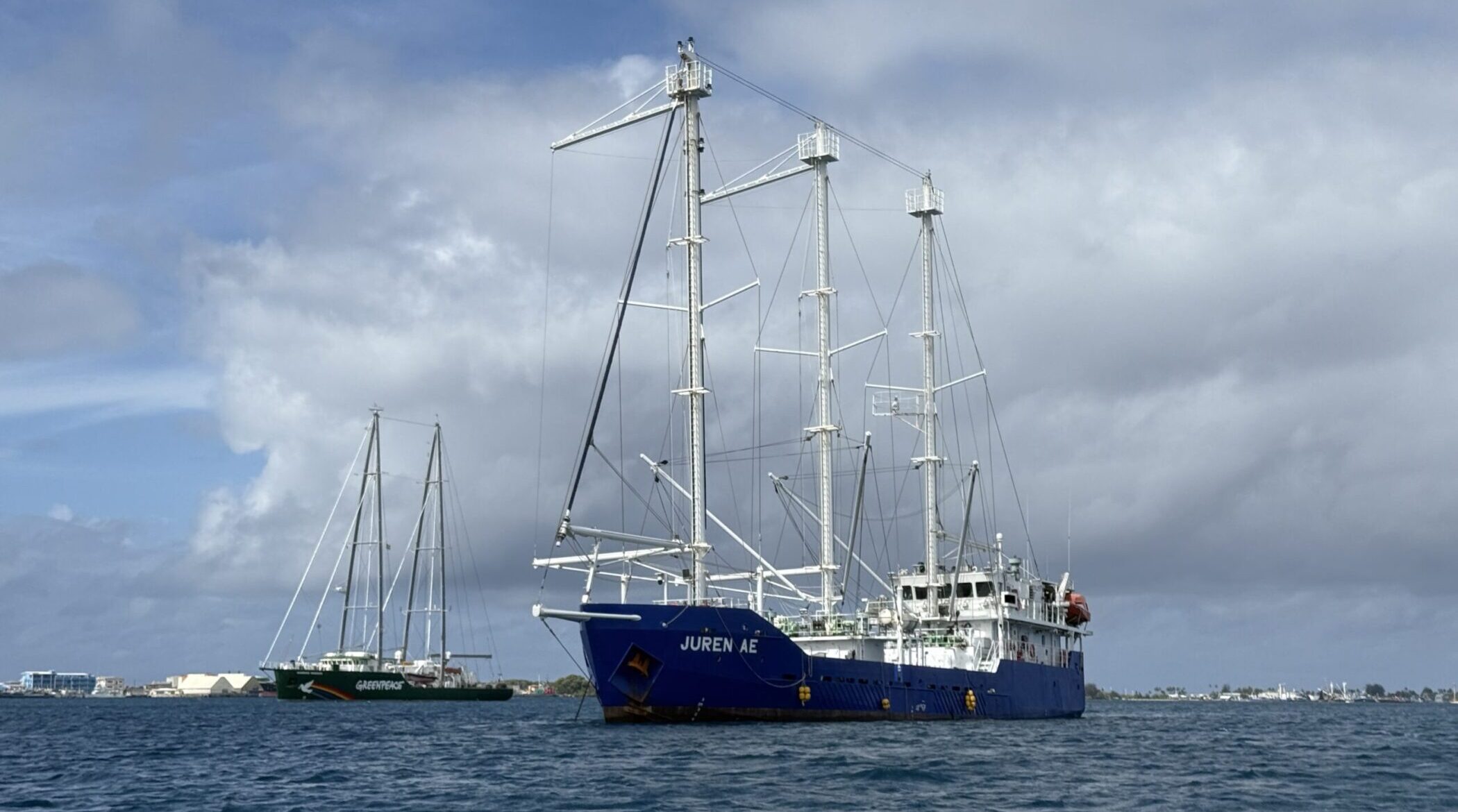
A key outcome of LCST is Juren Ae – a wind-powered cargo ship designed specifically for the Pacific. Named after a traditional Marshallese canoe paddle, she blends heritage and innovation. The vessel reduces CO₂ emissions by up to 80% compared to conventional ships in the fleet, thanks to her sail system, solar panels, battery storage, and hybrid electric propulsion.
Built at Asia Shipbuilding with engineering by Kostec and design input from SDC Hamburg, Juren Ae is equipped for island conditions. She carries up to 50 passengers, general cargo, frozen goods, fuel, water, and essentials. Her two 300m³ holds have folding hatches and ventilation for perishables.
The ship’s Indosail rig includes two large square sails and three headsails, all reefable and operated by electric winches. A 240kW DOOSAN diesel engine provides backup propulsion, and a 50kW electric motor supports low-speed or silent, zero-emission operations. Solar panels (11kWp) and LFP batteries supply onboard power, and the hybrid system can even regenerate electricity when under sail.
Hull design was optimised to balance the lateral forces of wind propulsion. A unique Wagner keel system improves stability and reduces drag. Sea trials confirmed excellent handling and speed – up to 12 knots under sail, and 9.7 knots in calm waters under engine.
Juren Ae is more than a ship – it’s a testbed. Over the coming year, we’ll collect data to fine-tune its systems and inform future designs. GIZ and the RMI government are also working with neighbouring island nations to replicate this model. By mid-2026, several countries are expected to join in ordering similar vessels, supported by international funding and knowledge-sharing through initiatives like the Pacific Blue Shipping Partnership.
This marks a real step forward in sustainable maritime transport for the Pacific.”
Article (courtesy Fair Winds Collective) by Ben Vroom, instructor Maritime Department at the College of the Marshall Islands (CMI)
Photo: Juren AE and Rainbow Warrior at Majuro (Karen Earnshaw)

Windassist sponsor