
China wants to lead in decarbonisation shipping
China’s decarbonisation target for shipping represents a crucial moment for international regulation, writes Heikki Pöntynen, CEO of Norsepower.
“On 13 April 2026, China’s Ministry of Transport set a mandatory CO2 reduction target for the maritime sector for the first time, guaranteeing that the CO2 intensity of international ships must be reduced by at least 15% by 2030 compared to 2025 levels. Alongside this ambitious target, China is setting up a national MRV (monitoring, reporting and verification) system for shipping emissions and a ship energy consumption database, which will give ships a CO2 intensity score.
This framework is a world first and ships with low ratings will now find it much more difficult to obtain the necessary accreditations, such as charter agreements and insurance, in the country. China is the world’s largest shipbuilding country, home to some of the busiest ports, and a flag state and ship owner of huge proportions. When China moves, the industry moves with it.
Norsepower is proud of its strong and established working relationship with China’s shipping industry. In 2024, Norsepower opened the world’s first dedicated rotor sail factory in Dafeng, China, right in the heart of our supplier network and strategically located along key shipping routes. The factory has a production capacity of 50 units per year, with plans to increase this to 100 Norsepower Rotor Sails™ per year by the end of 2027.
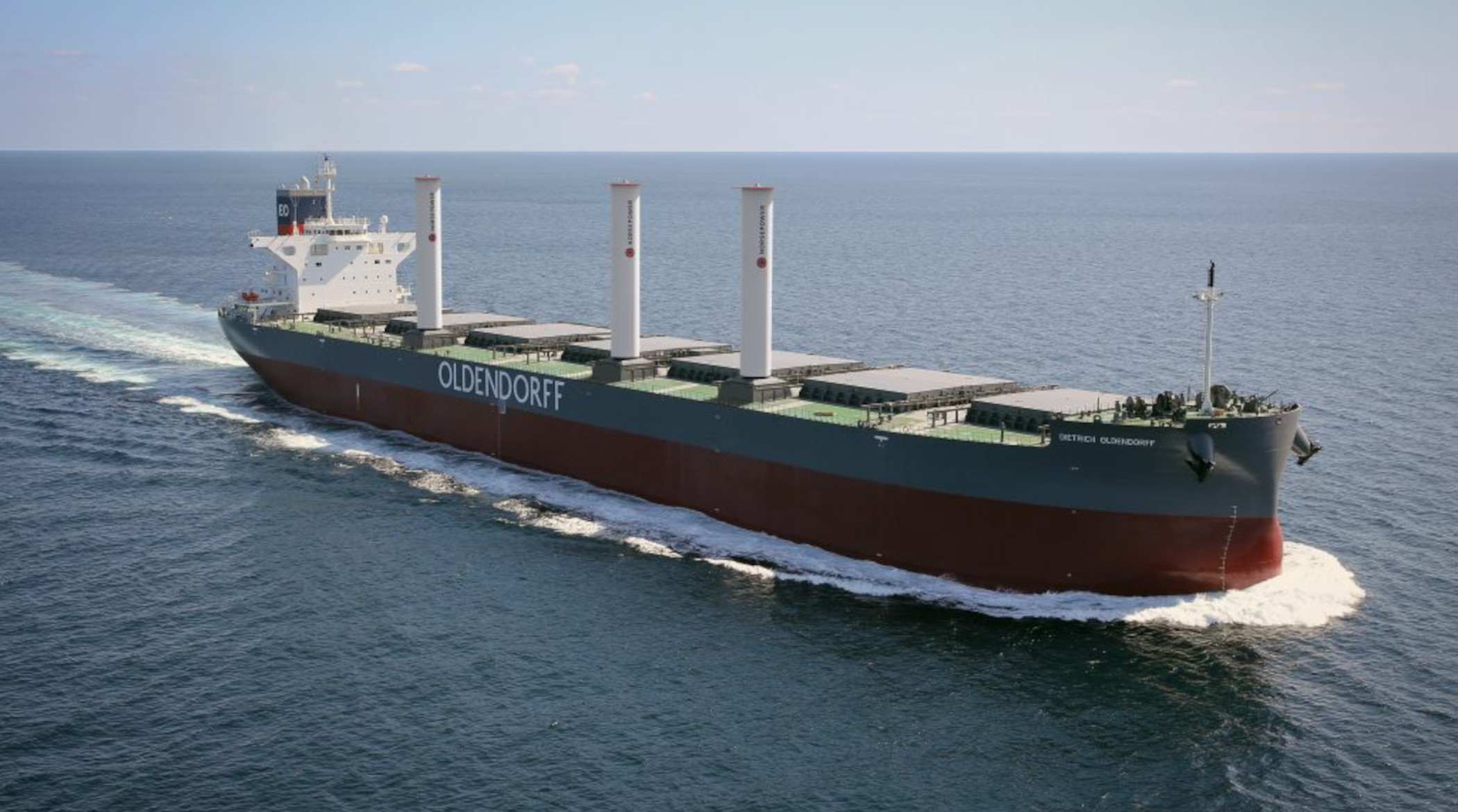
Chinese policy aims to accelerate the phase-out of older, more carbon-intensive ships. This poses a dilemma for ship owners: how to meet the new targets without scrapping assets that still have a commercial life? Wind propulsion is one of the most proven and scalable options available, which can reduce fuel consumption per voyage by up to 25% and significantly improve carbon intensity.In March 2026, Norsepower and COSCO Shipping Heavy Industry Equipment (CHIC) signed a comprehensive cooperation agreement covering the manufacture, installation, service and joint technical development of Norsepower Rotor Sails™. By combining Norsepower’s technological leadership with CHIC’s world-class manufacturing expertise and extensive service network, we are laying the industrial foundation needed to rapidly scale up wind propulsion within global fleets. […]
China’s announcement sets a positive tone at a crucial time for international shipping regulation. Although MEPC 84 did not formally adopt the IMO Net-Zero Framework, the meeting managed to keep negotiations going and restore some political momentum. Member states agreed that the draft Net-Zero Framework developed in 2025 would remain the basis for negotiations ahead of the next extraordinary session, scheduled for December 2026.
China’s targets now seem less of an outlier and more of an early step in the direction in which international regulation will eventually move.
Regardless of whether IMO finalises its framework this year, China’s domestic commitment shows that ambitious targets are now achievable. The more countries take action, either through the IMO or their own domestic regulations, the clearer the investment case becomes for shipowners considering wind propulsion.
Heikki Pöntynen.
Source: Seatrade Maritime News.
Image: Norsepower

Windassist sponsor