
America’s Cup heads for net zero for shipping industry
From wing sails to flying boats, technology developed for the world’s most famous sailing competition is finding its way into the commercial fleet as the industry races to reduce carbon emissions.
Merchant ship owners with an eye on their sustainability goals have Barcelona on their mind in October, as the America’s Cup sailing race taking place in the Mediterranean city offers industry inspiration for a net-zero future.
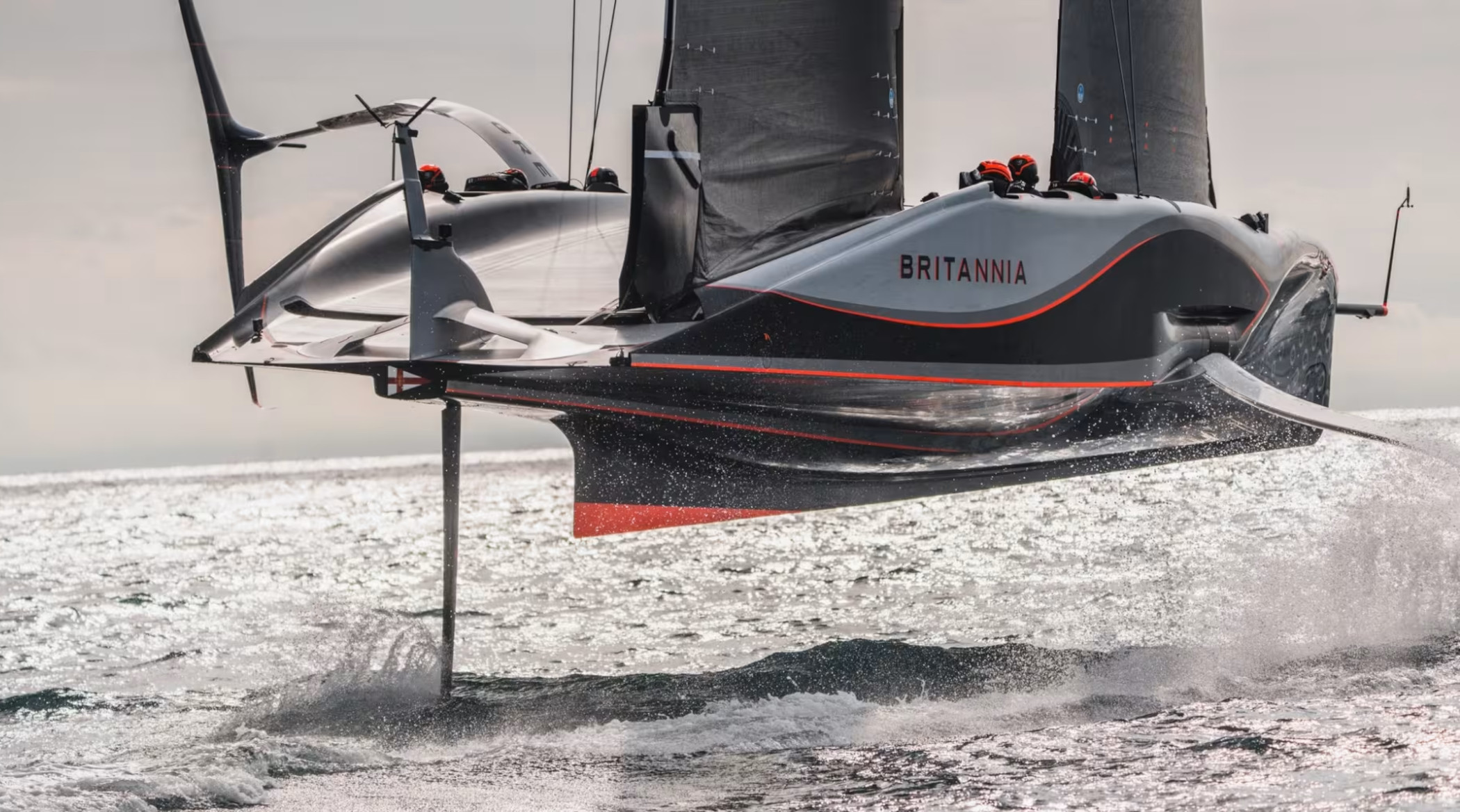
The sailing event, which takes place every three or four years in different locations around the world and is often described as Formula 1 racing at sea, brings together world-class sailors and cash-strapped design teams in an attempt to create state-of-the-art racing boats in the hope of winning the world’s oldest international sports competition.
Net-zero targets
But while the offshore action will undoubtedly be exciting to watch, it is the work taking place in the boat sheds and sailing halls ashore that could be more interesting for transfer to the shipping industry in its quest to meet its net-zero targets.
“A surprising amount of the technology being developed for the America’s Cup is finding its way into the commercial fleet,” as the industry “strives to reduce carbon emissions,” says Peter Sand of ocean analytics company Xeneta.
WindWings
BAR Technologies was founded by Ben Ainslie, captain of the British America’s Cup team in the past three campaigns, and medallist in five consecutive Olympic Games. The company emerged directly from the 2017 America’s Cup regatta with one simple idea: Why waste all the effort and money put into designing and perfecting these incredible racing boats when the event is over?
The maritime consultancy, based in Portsmouth, England, has since taken some of the most winning formulas from America’s Cup campaigns and applied them to the commercial sector. It is perhaps best known for its WindWings technology, solid sails developed with techniques borrowed from the America’s Cup and adapted for commercial shipping, allowing a ship to maintain speed while the engine is turned off, consuming less fuel and operating more efficiently and sustainably.
Transfer
“We are always pushing the boundaries in the America’s Cup,” said Ainslie. “When we set up the British team, we also set up a technology company. The wing sail technology was the most transferable for commercial shipping. And now they are on these huge commercial tankers.”
Read Perry Cleveland-Peck’s much fuller article on the Wall Street Journal’s site.
Photo: The Ineos Britannia training ‘flying’ on foils for the America’s Cup. (© C. Gregory/Ineos Brittania).

Windassist sponsor