

Rotor Sails: 3-6 years payback under EU ETS
Research by the Tallinn University of Technology in Estonia predicts typical payback periods of just 3 to 6 years under the EU Emissions Trading System (EU ETS).
The Estonian Maritime Academy of the university has published a new peer-reviewed study exploring the economic feasibility and operational performance of rotor sails in maritime transport. It is based on data from 25 real-world installations and a novel simulation model.
The article is published on MDPI, a publisher of open-access scientific journals and can be downloaded in various formats, click here.
Abstract
The maritime sector is under pressure to increase ship energy efficiency and reduce greenhouse gas (GHG) emissions as a part of global decarbonization goals. Various innovative technologies are being adopted in recent years, raising concerns not only about technological feasibility but also about the economic viability of such technologies in the context of sustainable maritime practices.
This study evaluates the operational performance, potential to increase energy efficiency, and economic feasibility of wind-assisted propulsion technologies such as rotor sails across different vessel types and operational profiles. As a contribution to cleaner and more efficient shipping, energy savings produced by rotor thrust were analyzed in relation to vessel dimensions and rotor configuration.
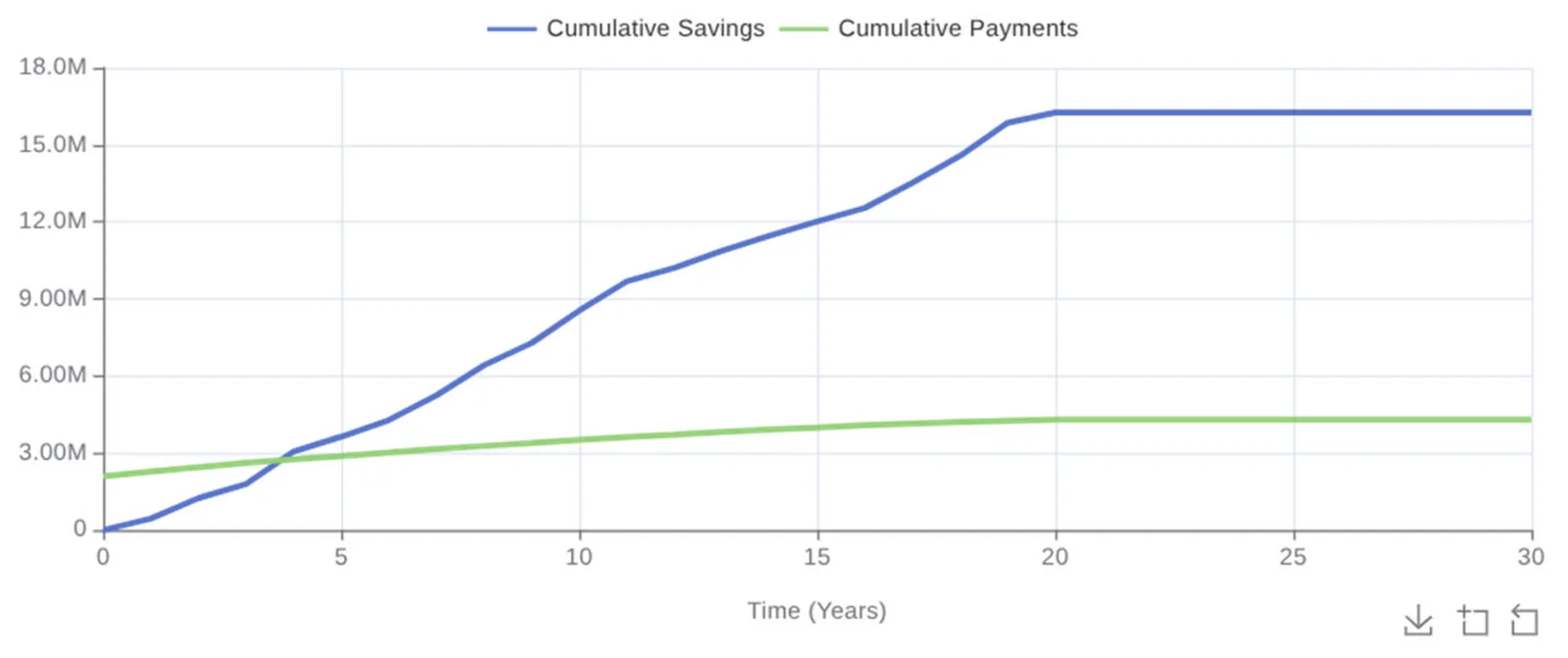
The results derived from publicly available industry data including shipowner reports, manufacturer case studies, and classification society publications on 25 confirmed rotor sail installations between 2010 and 2025 indicate that savings typically range between 4% and 15%, with isolated cases reporting up to 25%. A simulation model was developed to assess payback time based on varying fuel consumption, investment cost, CO2 pricing, and operational parameters. Monte Carlo analysis confirmed that under typical assumptions rotor sail investments can reach payback in three to six years (as the ship is also liable for CO2 payments).
These findings offer practical guidance for shipowners and operators evaluating wind-assisted propulsion under current and emerging environmental regulations and contribute to advancing sustainability in maritime transport. The research contributes to bridging the gap between simulation-based and real-world performance evaluations of rotor sail technologies.
Source: LinkedIn and original article
Picture: Tallinn University of Technology by Lauri Veerde, CC BY-SA 4.0, via Wikimedia Commons (cropped)

Windassist sponsor