
TOWT to be acquired by Crédit Mutuel
The commercial court in Le Havre has approved Crédit Mutuel-RES’ takeover of the sailing transport shipping company TOWT. Under the name NEW TOWT, the shipping company will continue with four vessels.
Its activities will focus on the Normandy-Brazil line. NEW TOWT will operate the four vessels already built; two newbuildings at Piriou in Vietnam will be cancelled. In France, 37 of the 48 jobs will be retained.
The commercial court in Le Havre on Thursday 7 May approved the takeover bid of TransOceanic Wind Transport (TOWT), carried by Crédit Mutuel through its fund Révolution environnementale et solidaire (RES). After Sandton Capital Partners withdrew, this remained the only bid. The acquisition became effective on Friday 8 May.
The consortium consists of RES, which had already been a historical shareholder since 2024 through ship financing, Ceres (Mulliez group), Swiss fund Après Demain and holding company Kefen. It envisages an immediate capital injection of €6.4 million to recapitalise the company, which will be renamed New TOWT. Karl Sement, who was appointed managing director in January, will take charge of the new company.
Relaunch
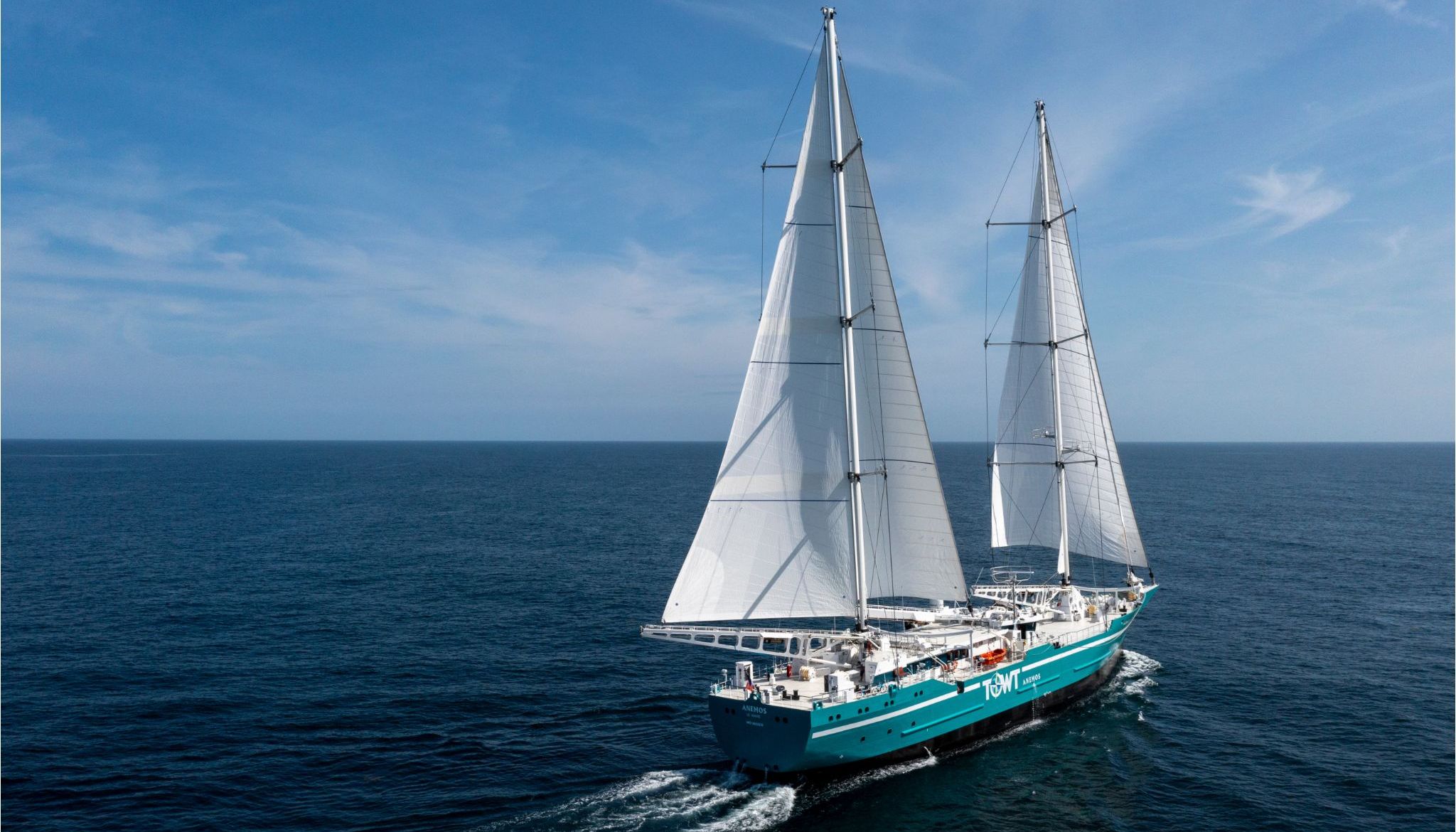
Maritime operations will be restarted as early as this spring, with the two already commissioned sailing freighters, the Anemos and the Artemis. These are currently docked in Fécamp and will soon return to sea.
Of the 48 employees TOWT had at the time of the court liquidation on 3 April, 37 jobs will be retained. Two additional commercial managers will also be recruited to support the commercial restart.
As of now, the focus will be on the Normandy-Brazil link. This was started early this year with coffee as the main cargo. Four vessels will provide a regular rotation on this route. The line is considered more profitable and commercially attractive. The vessels will be used on this line or by charter elsewhere, if necessary outside Normandy.
Restructured fleet
TOWT, founded in 2011 by Guillaume Le Grand, initially chartered traditional sailing vessels before delivering the schooners Anemos and Artemis in 2024 (81 metres long, cargo capacity of 1,000 tonnes). Six new sailing freighters were then ordered from Piriou. The takeover plan ensures the delivery of the two vessels, which are nearing completion. Thanks to an agreement with Piriou, two of the four remaining vessels will be cancelled, reducing the financial burden. The two new vessels currently at Fécamp will be immediately incorporated into the active fleet.
TOWT filed for suspension of payments at the end of March and was judicially liquidated on 3 April, with operations continuing for another month. According to founder Guillaume Le Grand, the company was experiencing an “annus horribilis” in 2025. Among other things, he pointed to the sharp rise in construction costs, the lack of an appropriate fiscal and social framework for sailing transport, historically low freight rates and low oil prices, and the impact of Donald Trump’s trade war.
With the choice of a banking acquirer, which has known the file well since 2024, the main focus is on immediate liquidity and securing shipping assets rather than ambitious expansion. At the same time, a bill to ease social burdens on the sector and create the regulatory framework is being worked on in parliament.
Solid team and undiminished conviction
In a message from TOWT, Karel Sement, CEO of NewTOWT, writes that the company has an undiminished conviction: to demonstrate that maritime transport that is frugal, reliable and free of fossil energy is not only possible but also desirable.
“We owe this new phase to everyone – crews, shore-based teams, shipper customers, port partners, financiers and institutions – who never stopped believing in this pioneering project. We receive their trust with humility and with a renewed sense of responsibility and quality.
Our commercial course is clear: open the line to Brazil to meet the demand of our coffee customers, continue the construction of the vessels planned between 2026 and 2028, and fulfil day by day the commitments we have made to each shipper.”
Sources: MeretMarine, TOWT.

Windassist sponsor