
Cargill continues to invest in wind support
Cargill has announced that on its way to the IMO goal of achieving net zero emissions by 2050, it intends to continue investing in wind-assisted propulsion technologies, dual-fuel methanol-powered ships and digital solutions
Cargill has announced that on its way to the IMO goal of achieving net zero emissions by 2050, it intends to continue investing in wind-assisted propulsion technologies, dual-fuel methanol-powered ships and digital solutions.
“Decarbonising shipping is a monumental task that requires courage, innovation and collaboration,” said Jan Dieleman, president of Cargill’s Ocean Transportation business. Cargill supplies food, ingredients, agricultural solutions and industrial products for agribusinesses worldwide. “Our role extends beyond freight transportation services; we aim to catalyse an industry-wide shift towards sustainable practices. Through strategic investments in advanced technology and robust partnerships, we are accelerating the journey to net zero emissions in shipping.”
Innovate
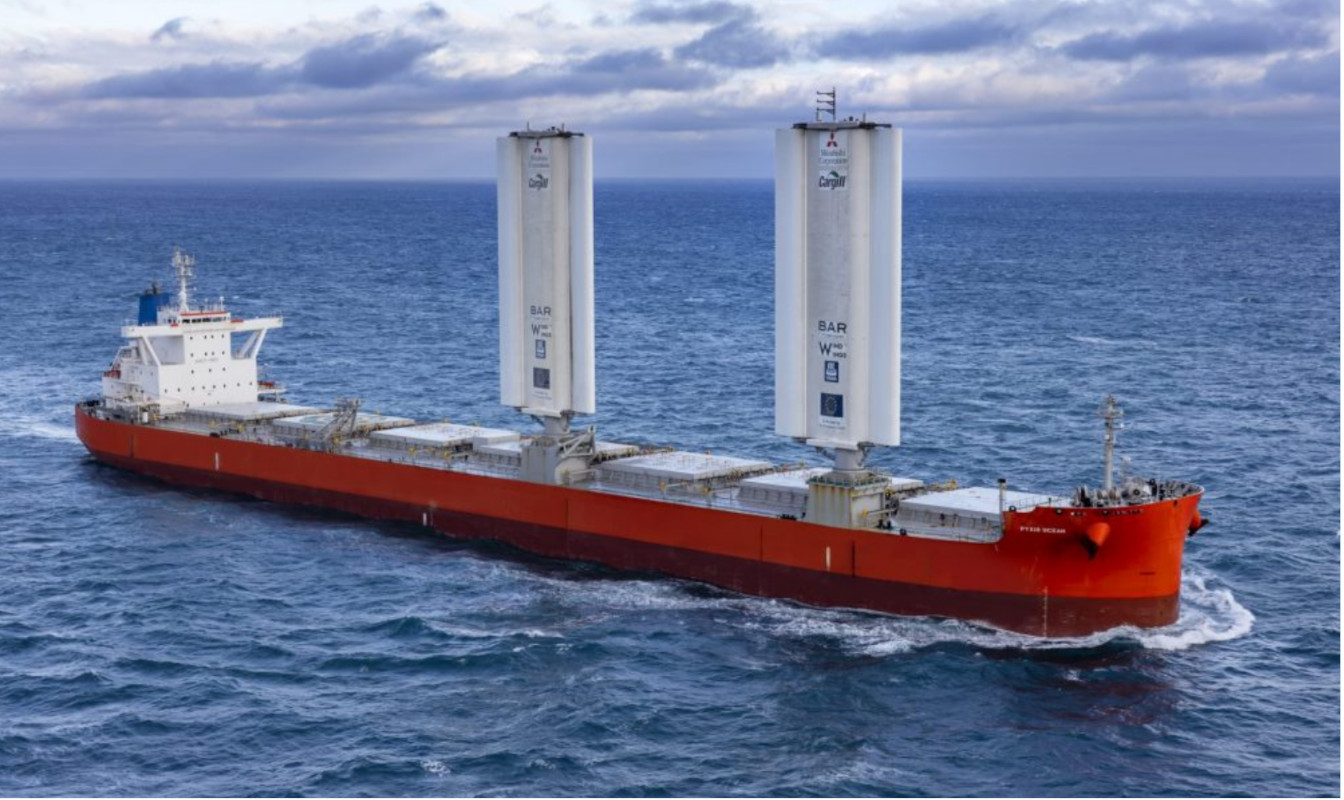
The Pyxis Ocean-the first dry bulk carrier equipped with WindWings® from BAR Technologies-is leading the way in wind-assisted propulsion and completed its maiden voyage in 2023. WindWings are large, rigid sails that use wind power to reduce fuel consumption and emissions.
In addition to WindWings, Cargill has expanded its WASP programme with VentoFoil vertical suction sails on the NBA Magritte and rotor sails on the TR Lady. With these three vessels, the company is experimenting and learning before scaling up the technical, operational and commercial aspects. […]
Wind energy contribution
Cargill believes wind energy can make a significant contribution to achieving its decarbonisation goals in the short, medium and long term. Dieleman says the cost of fuels that can contribute to a carbon-free future may remain high, but developing, testing and improving wind-assisted propulsion technologies before these fuels are available can reduce dependence on them.
Other fuels
In addition to wind propulsion, Cargill is transforming fuel use on its fleet. The company is pioneering biofuels made from renewable sources, such as fatty acid methyl esters (FAME), which offer a drop-in fuel option to reduce emissions without extensive engine modifications. By 2023, the company has moved from testing these fuels to frequent implementation as it prepares to scale up. In 2023, nearly 172 000 tonnes of biofuel blends were enriched with 63 000 tonnes of FAME. Cargill has also signed agreements for dual-fuel ships running on methanol, which are expected to be operational within the next two years. […]
Digital solutions
Digital innovation is also at the heart of Cargill’s efforts to reduce carbon emissions. Cargill uses advanced digital tools, including journey optimisation technologies, such as ‘digital twins’ of its ships, to optimise speed and route planning. […]
Sustainable future through collaboration
Recognising that decarbonising the maritime industry requires a collaborative approach, Cargill is working with the entire industry to make meaningful progress. As a founding member of the Maersk Mc-Kinney Moller Centre for Zero Carbon Shipping, Cargill works with captains of industry to test and promote alternative fuels, including ammonia and methanol. Cargill is also a key player in the Sea Cargo Charter, a coalition dedicated to reducing the climate impact of shipping.
“As we continue on this journey, we focus on solutions that not only improve our own operations, but drive change across the industry,” Dieleman adds. “Our vision is a shipping industry that delivers the goods the world needs while protecting the future of our planet. We are proud to be part of this transformation and are committed to a more sustainable future for global shipping.”
Source: DryBulkMagazine.
Editor’s note: As a major player in agribusiness, Cargill is by no means an uncontroversial company; the climate impact of intensive agriculture and animal husbandry is highly debated in The Netherlands and beyond. It is commendable that Cargill wants to fall in line with IMO targets in terms of its ship transportation. At the same time, it is clear that the publication of the above article was largely initiated by Cargill itself. The editors have therefore taken the liberty of changing the colour of some adjectives, thereby giving the article a somewhat more factual character.

Windassist sponsor