
The wind is back at sea
While shipowners around the world are investing in methanol, ammonia and battery-electric propulsion, Odfjell is maximising the performance of existing vessels, with measurable results for fuel bills as well as CO₂ emissions.
‘We are not waiting for miracles, we are working with what we already have,’ says Erik Hjortland, vice-president of technology at Odfjell. Schuttevaer spoke to him at a meeting of the Norwegian Shipowners’ Association in Oslo. ‘And anyone who thinks wind is nostalgia is wrong. Wind is back at sea.’
Data as fuel saver
Odfjell started a structural energy-saving programme in 2007. Since then, a dedicated team has been monitoring the fleet’s performance on a daily basis. Hjortland: ‘We analyse hundreds of operational parameters. If a ship’s fuel consumption suddenly increases, we usually know within a few hours. Then we intervene immediately. Every day we receive an average of a hundred reports from on-board systems, on which we take action. That speed makes all the difference.’
The approach is simple, but requires discipline. By quickly cleaning hulls and propellers, Odfjell prevents fouling and drag. ‘Sometimes a hull cleaning saves up to 10 tonnes of fuel per day. On average, for treated ships, we save around 3.5 tonnes per day. Those are hard figures. And all that with a sponge and a brush, so to speak.’
Structured retrofit
Most vessels in the Odfjell fleet are between 10 and 15 years old. Instead of waiting for new designs or revolutionary propulsion, the shipping company consciously invests in retrofitting the existing fleet. Since 2014, more than $40 million went into energy-saving technologies. These include Mewis Ducts (fairings), PBCFs (propeller optimisation), reverse osmosis units and LED lighting.
A total of 140 installations have now been carried out, with another 50 planned over the next few years. Hjortland: ‘We choose very specifically. Only if something works technically and pays for itself within a reasonable time will we apply it to the entire fleet. Pilots are leading. If the outcome is “maybe”, we don’t do it.’
The power of wind
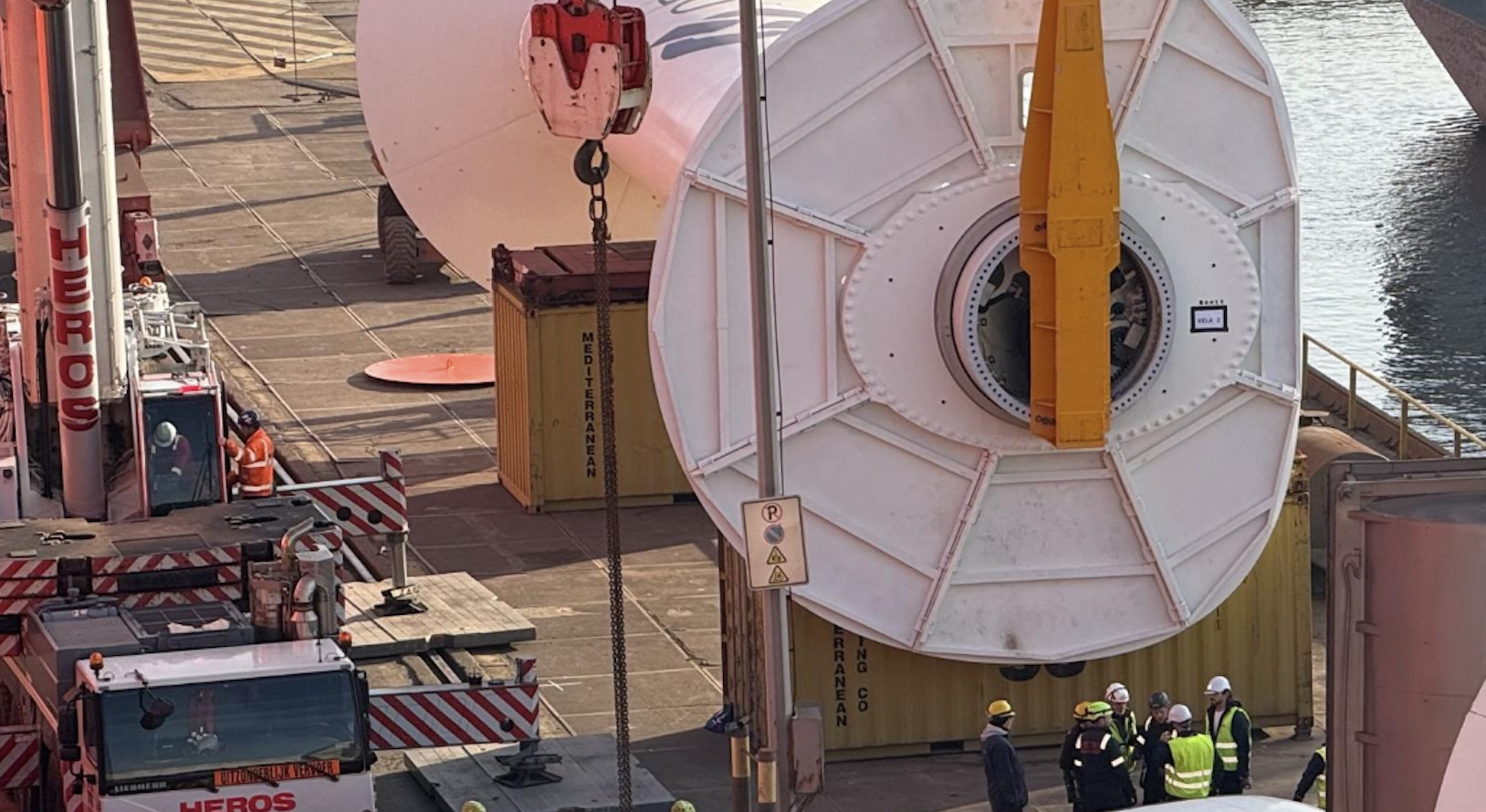
The latest step in the savings programme is strikingly visible. In March 2025, four suction sails from bound4blue of Spain, each 22 metres high, were installed on the chemical tanker Bow Olympus. They were fitted during a scheduled dry-docking in Antwerp. ‘That took only two days. The technology works autonomously and requires hardly any adjustment from the crew’, says Hjortland.
The first trip, from Antwerp to Houston, yielded immediate fuel savings of more than 20%. ‘We expect the return trip to Europe to be even more favourable because of the wind direction. And that’s the beauty: wind is free, readily available and efficient.’
Loss at e-fuels
Odfjell follows developments around e-fuels such as methanol and ammonia with interest, but also with scepticism. Hjortland: ‘Up to 80% of energy is lost in the production process of synthetic fuels. Against that loss is an efficiency of about 90% when wind power is applied directly. Then rationally, the choice is quickly made.’
For battery-electric sailing, Odfjell is less enthusiastic, although it is on the radar. Hjortland: ‘For an ocean crossing with a battery ship, you need six complete battery banks. That is technically fascinating, but economically and practically still a long way off. We are not ruling it out for new builds, but it is not a solution for today’s fleet.’
Structural approach requires discipline
According to Hjortland, the key to success lies not in one technology, but in a systematic approach. ‘We don’t do things just because they sound green. We want to test them first, calculate them, validate them. That way, we build on what already works. The simple measures are largely in place. Now it is becoming increasingly difficult to achieve the same gains with new investments. Marginal returns are levelling off.’
Still, he says, there is much to be gained. ‘Worldwide, 63% of the seagoing fleet does not have any form of energy-saving technology on board. If everyone did what we are already doing, the industry would make huge strides in a short time. But that requires a different mindset. Not grand and compelling, but pragmatic and consistent.’
No belief in revolution
Odfjell is committed to incremental fleet improvement, based on facts and measurable results. ‘We have now achieved energy savings of 53% compared to 2008. Our goal is to reach 57% by 2030. That sounds like a small step, but it is the most difficult one. The stretch is gone, some say. But I think we still have plenty of room, as long as we keep thinking creatively.’
According to Hjortland, that is exactly what the industry needs. ‘Every per cent counts. And anyone who thinks wind is nostalgia is wrong. Wind is back at sea. And not as a romantic picture on the horizon, but as a rational choice for propulsion.’
Source: an article by René Quist in the Schuttevaer (for subscribers only).
Image: Preparation of the foundation of a wing sail (©Odfjell)

Windassist sponsor