
Unnecessary deaths in sinking Bayesian?
In the sinking of the yacht Bayesian off the coast of Sicily in August 2024, six out of seven people would not have had to drown had adequate help been provided immediately, says salvage expert Nick Sloane.
Sloane is one of the world’s leading experts on maritime salvage. Among other things, he led the salvage operations of the Costa Concordia cruise ship that ran aground, capsized and sank off the Italian island of Isola del Grigio in 2012.
According to Sloane, investigations showed that six of the seven victims had taken refuge in air pockets in the hull and later died from suffocation rather than drowning. The expert believes that if an operation to pump air into the yacht had been launched in the first hours after the sinking, there would have been a real chance of saving them. The Italian divers, Sloane said, were well trained but could only operate for a few minutes at a depth of about 50 metres because they did not have the specialist equipment needed for prolonged operations in such conditions.
Technical investigation
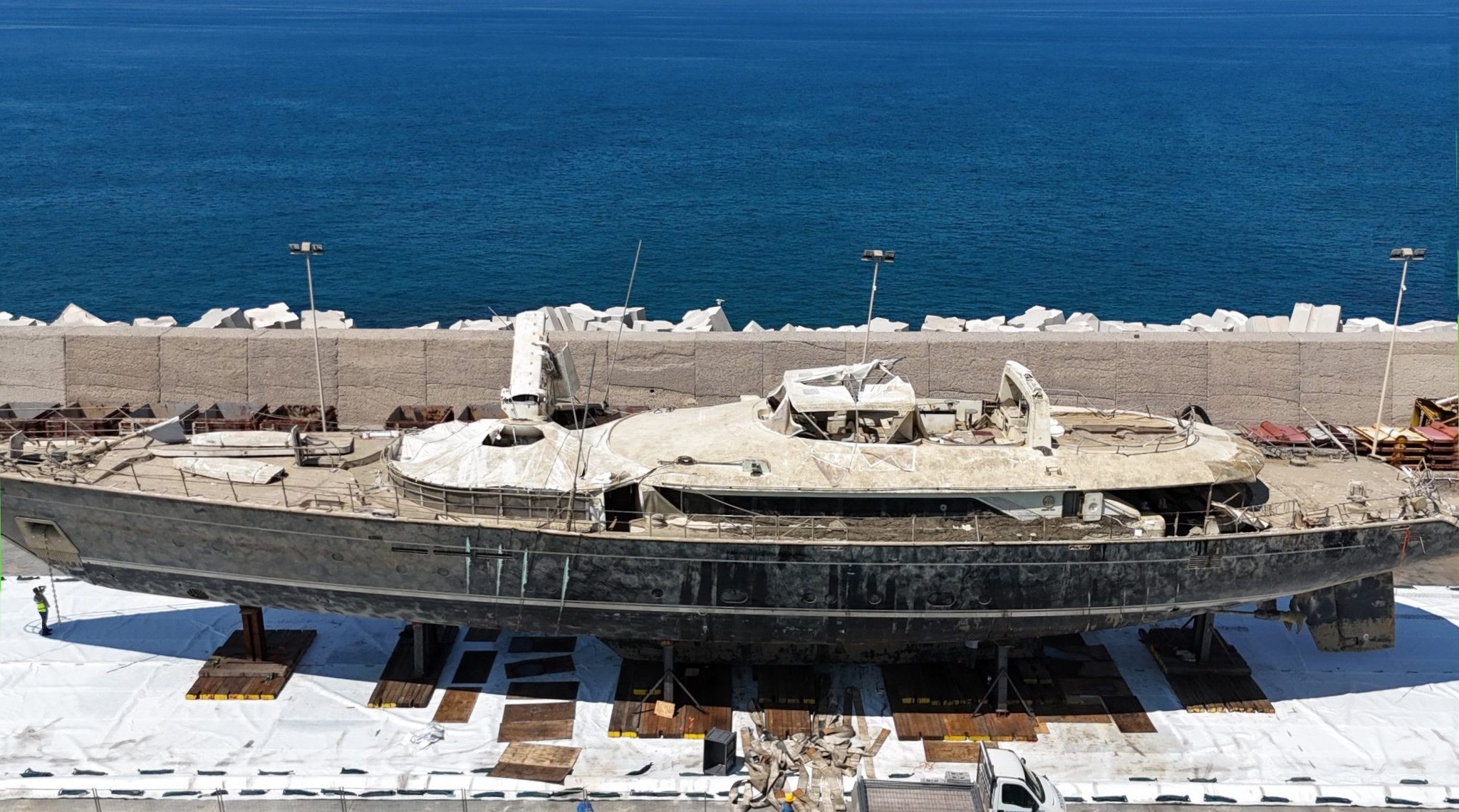
The wreck of the Bayesian was recovered in June 2025 and transferred to the Termini Imerese port near Palermo, where Italian prosecutors launched further technical investigations. According to Sloane, despite having spent 10 months at a depth of 50 metres on the seabed, the 56-metre sailing yacht can be simply restored and a buyer could save many millions this way. The question remains whether the ship, with its tragic history, is an attractive property, Sloane said.
Criminal investigation
Meanwhile, the Italian judiciary’s criminal investigation continues. That focuses initially on three crew members of the Bayesian, the captain, the first engineer and a sailor. A separate investigation has been launched into the death of a Dutch diver during the salvage operation.
Maritime investigation
A maritime investigation is being conducted by the UK Marine Accidents Investigating Branch (MAIB) because the ship was flying the British flag. Among other things, that investigation looked at the stability of the yacht. That had changed considerably when the new owner had the two much shorter masts of the original kits rigged Salute replaced with a single 72-metre mast.
The MAIB investigation showed that winds of more than 63 knots were enough to capsize the vessel with sails set and keel raised as was the situation when a mini-cyclone with gusts up to 84 knots plagued the vessel. The crew could not have known this because the stability book had not been updated, MAIB investigators said.
Source: Willem de Niet in the Schuttevaer.
Image: ©TMC Marine

Windassist sponsor