

Opportunities for sailing cargo in light of Iran war
Australian ship designer Derek Ellard has so far received little attention for his sailing cargo plans. But now he is on the cover of SME Business News. His ambitions are therefore big.
The company specialises in small ships of less than 2,000 tonnes, combining traditional sailing aesthetics with advanced wind, solar and electric technologies.
The company’s fleet includes versatile ketches, the Electric Clipper series and smaller, containerised boats, all designed with efficiency, safety and minimal environmental impact in mind.
With global hubs, adaptable vessels and a focus on reliability and cost efficiency, Go Sail Cargo aims to tackle modern maritime challenges and provide solutions for logistics, tourism, research, disaster relief and sustainable shipping.
The company is based in Queensland, Australia. SME Business Review interviewed Ellard about Go Sail Cargo’s vision, development and future plans, as well as the impact of sustainable technology on the maritime industry. And the plans are great. They just wait realization.
Excerpts from the interview
How did Go Sail Cargo come about and what challenges did you face as a founder in the early years?
Go Sail Cargo was founded in 2018 in response to the persistent lack of action and, at times, outright denial of man-made pollution and its clearly visible global impact. Unfortunately, little has changed and our planet continues to suffer serious consequences.
My response was to focus on practical solutions, which have since evolved into viable business propositions. In the early years, the many challenges included limited access to serious capital, substandard technology and the complexity and cost of designing even small cargo ships. Yet these challenges proved to be a ‘blessing in disguise’, allowing my expertise to deepen and problem-solving innovations to mature.
The current war against Iran brings further challenges but also strengthens my resolve. Amid the ongoing volatility of oil supplies, as well as the loss of innocent lives, waste of resources and severe pollution, Go Sail Cargo’s war-resistant, oil-immune ships offer a logical alternative. The need for zero-emission ships has never been more urgent.
Why did you decide to build wind-powered cargo ships?
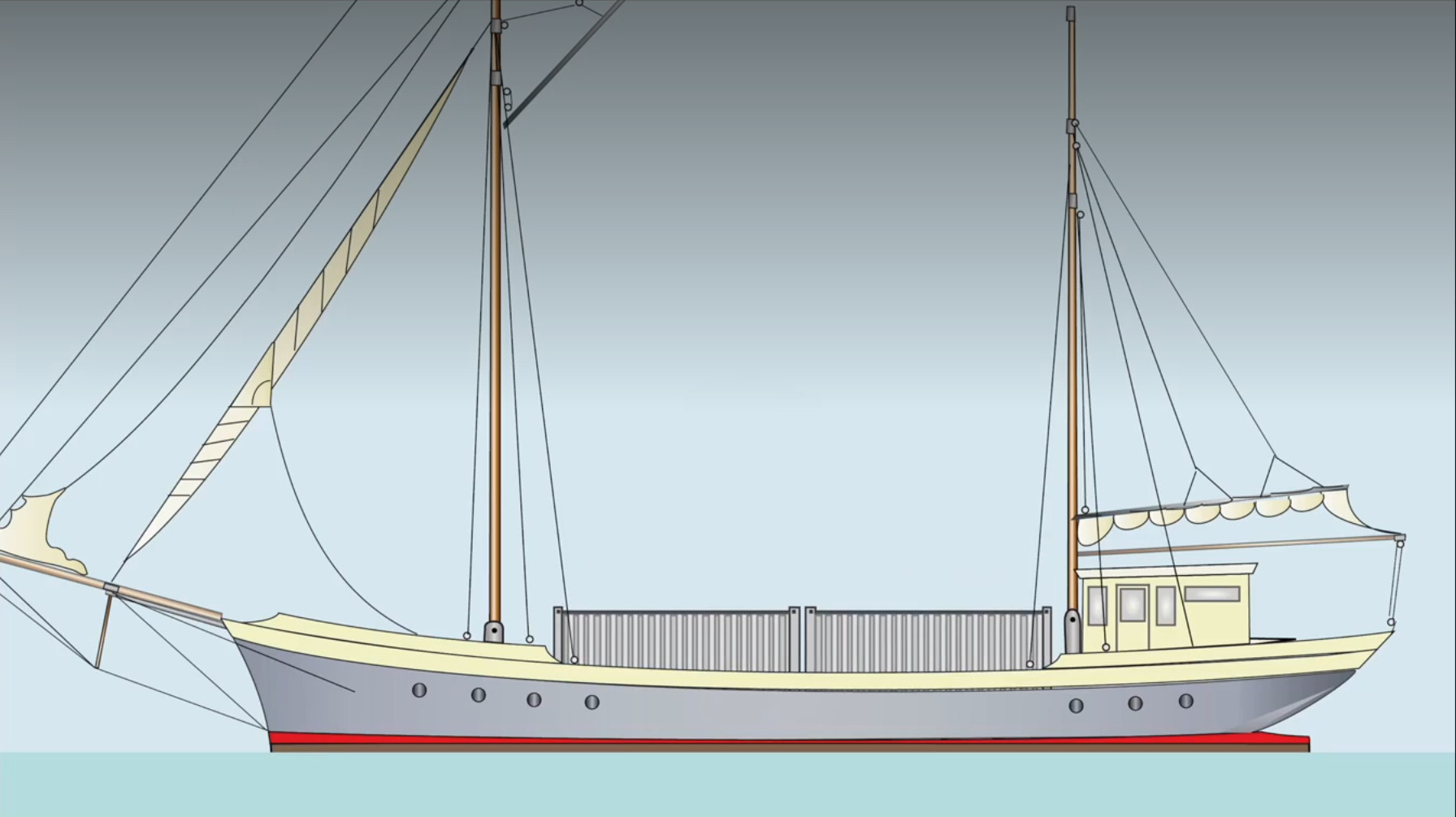 My focus was and still is on the ‘small ships’ sector, ships of less than 2,000 tonnes, which are best suited to ‘soft sail and solar’ design. The decision was simple, as wind and solar energy are free, non-polluting and basically inexhaustible. […]
The boats are versatile and suitable for containers, as well as ready for all kinds of mixed cargo. There are no new inventions in sails, rotors or kites, and the rigging is familiar to sailors around the world. Powered systems allow the crew to be kept as small as possible, but manual operation is always possible.
The boats are an innovation of efficient ketch rigging and contain numerous small but important innovations, too numerous to list here. But together they form a practical and profitable working vessel, ready and able to offer significantly lower operating costs without sacrificing reliability or safety.
How did you convert traditional 19th-century cargo ketchers into modern zero-emission vessels?
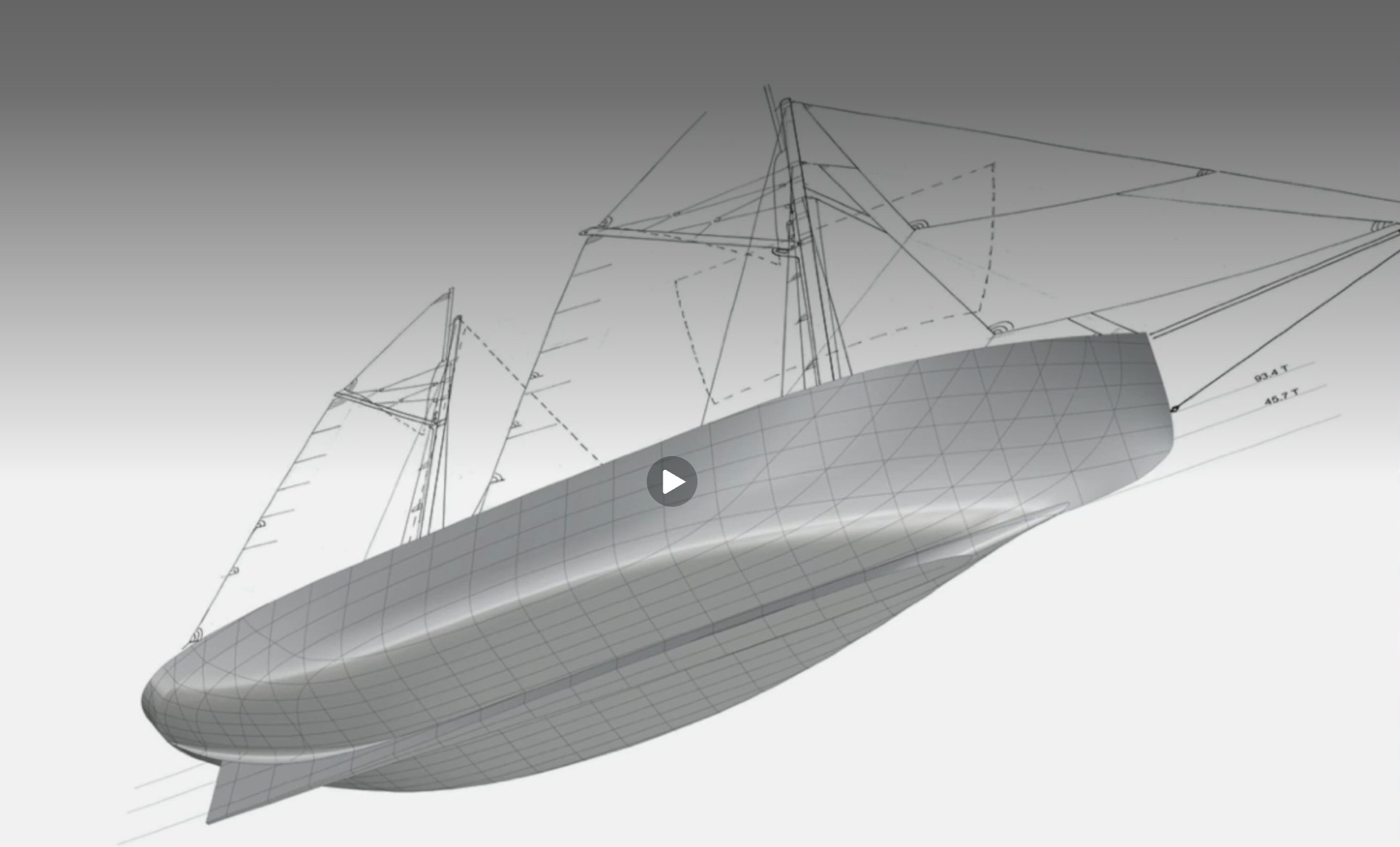 We made effective and appropriate technological improvements in hull design, rigging efficiency, building systems, navigation aids and safety measures. We have improved stability, specified container compatibility and ensured full integration into modern logistics. Thus, the simple trade ketch has evolved. Our passengers and crew will now enjoy all modern facilities, and our beautiful ships will be welcome in any port, as we do not burn fossil fuels to keep the systems running.
What new ships or developments are in the pipeline for Go Sail Cargo?
We study global trends, renewable energy statistics and new discoveries, and we think about our grandchildren. With that in mind, all kinds of new sailing, solar and electric vessels are planned, including RoRo catamarans for passengers and vehicles, cruise ships, fishing boats, submersibles, inter-island cargo catamarans and a new generation of pleasure boats.
Many of the proposed vessels are at an advanced stage of development, while some are still concept sketches. They can be easily adapted to specific sectors and quickly modified to carry containers or mixed cargo and containerised research, medical or film equipment, all powered by renewable energy.
What are the business plans and prospects for the next five years?
The plans for the next five years can be summed up in one sentence: the creation of a pan-dimensional, all-encompassing, billion-dollar international shipping cooperative, based on the combination of traditional aesthetics and values, plus the application of proven technology.
 To realise that limitless vision, the business model is based on abundance, not greed, with the perfectly logical driver being that modest profits derived from thousands of ships are arguably far greater than excessive profits on just a few. Go Sail Cargo’s success is measured not just by profits, but by real and lasting benefits for all life. Pan-dimensional success will ensure a healthy business, a healthy return on investment, equity distributions, community support and environmental restoration.
From a proposed headquarters in the Philippines, we plan to set up regional hubs under the GSC umbrella. Investment, development and products will be adapted to local conditions, and most of the locally generated profits will remain in the regions. Production, supply, maintenance and operational costs are all minimised, while profitability is increased.
The main business hubs are Central and East Asia, the Americas, the EU, Africa and Asia Pacific. I am based in Australia, the key partner in Mindanao, Philippines, another in Singapore, a key supplier in the US and another in the UK.
The core team now comprises myself as founder/director and an established agribusinessman, along with a captain, an expert in traditional sailing, a naval architect and an innovative battery manufacturer. Design studies have been completed, feasibility studies are underway, the chosen shipyard has been contacted and preliminary concept documents have been prepared.
This article is a summary. The whole article can be found here (pdf).

Windassist sponsor