
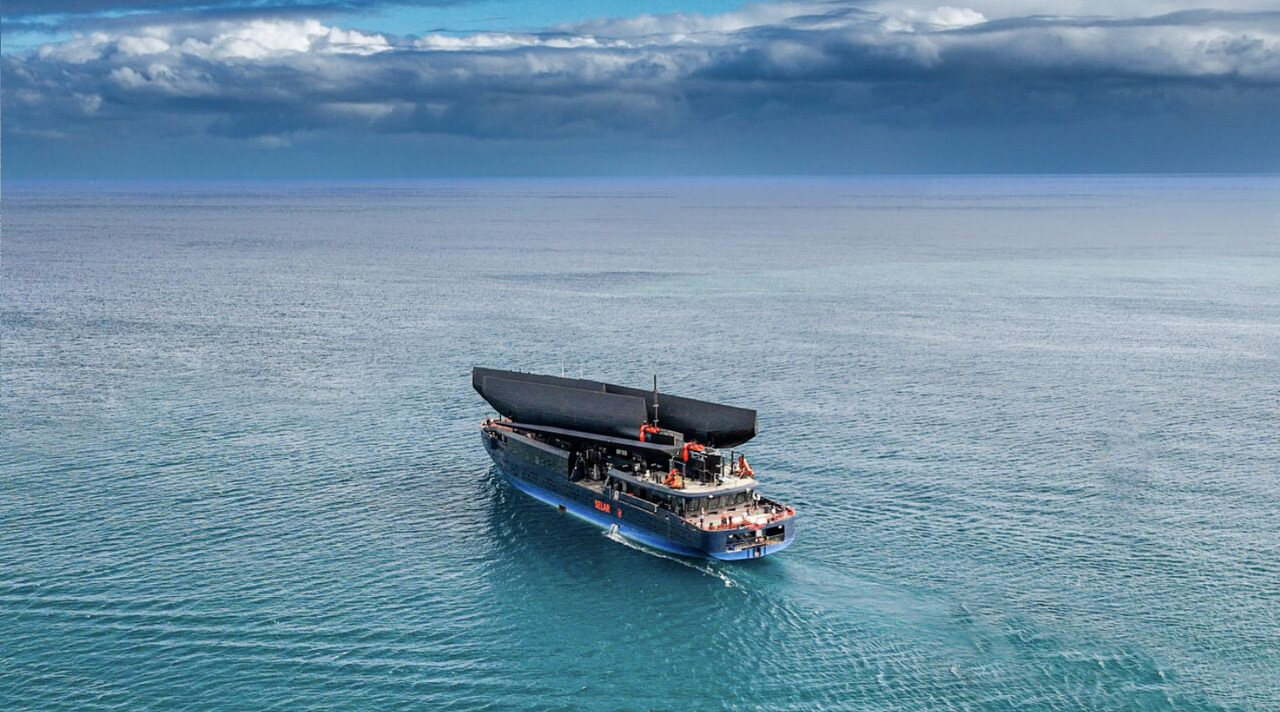
Captain Arctic starts seatrials
The new polar expedition vessel Captain Arctic, owned by the French shipping company Selar, began sea trials off the coast of Mauritius last week, ahead of its scheduled delivery on 10 November.
The 70-metre-long vessel, with ice class PC7, will be delivered at the facilities of Chantier Naval de l’Océan Indien in Port-Louis. The vessel is still in the final commissioning phase, and further sea trials are scheduled under various wind conditions. The hull was built by Goltens in Dubai following a keel-laying ceremony in late 2024 and launched in October 2025. Ship-ST was responsible for the naval architectural designs. The vessel is classified by Bureau Veritas.
Sophie Galvagnon, CEO and co-founder of Selar, is overseeing the sea trials, during which the ship’s structure and the operation of the five rigid sails, amongst other things, have been assessed.
Galvagnon said that changes had also been made to details of the interior and waste management, “but nothing drastic or significant, probably because we had already put a lot of work into the project beforehand.”
90 per cent reduction in emissions
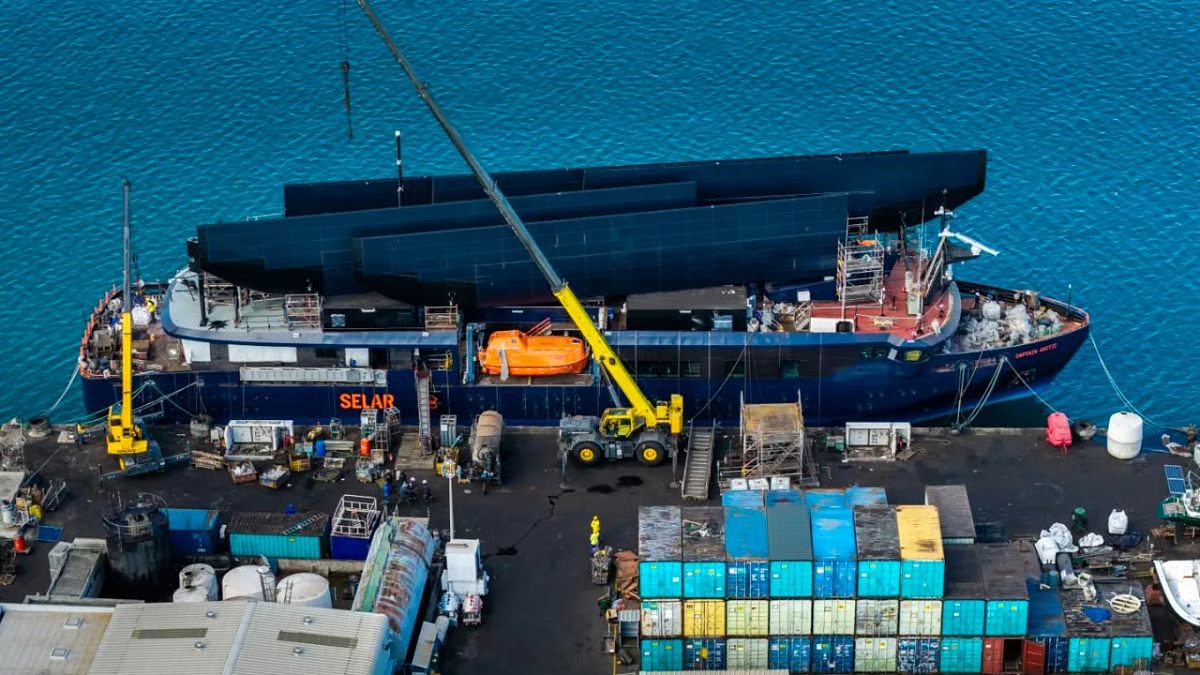
The patented aluminium sails were designed by Cormoran. Each sail is 35 metres high and together they support nearly 2,000 square metres of solar panels.
The sails were installed prior to the launch on 25 August and were mechanically tested whilst the ship was still moored.
Wind and solar energy are combined with a battery bank, hydrogen generation via the two propeller shafts and an auxiliary engine running on biofuel. Selar aims to achieve CO₂ emissions that are 90 per cent lower than those of most cruise ships in the region.
Two cruises already sold out
Captain Arctic can accommodate 36 passengers and 24 crew members. Selar is planning 14 sailings in 2027, combining voyages through Norway with expeditions to Svalbard and Greenland, and a further 14 in 2028.
Galvagnon said that the occupancy rate for 2027 stood at 80 per cent, with the first two cruises through Norway already sold out.
Swiss Army knife
Galvagnon is particularly delighted that her brainchild is now sailing under its own steam. On social media, she noted that the ship’s uniqueness lies in its versatility: ‘[The Captain Arctic can be] powered by the wind via its solar sails, diesel-electric, biofuel-electric, battery-powered, or a combination of all these propulsion systems.
A true Swiss Army knife when it comes to propulsion, adapting to the weather, the environment and the conditions of every expedition.’
Galvangon was delighted that during the sea trials, representatives from the classification society, the shipyard and the crew were unanimous in their admiration for the impressive silence and the almost complete absence of vibrations on board. Her aim is therefore ‘to explore the most remote and extraordinary places on Earth, with nothing but the sounds of nature all around you.’
Source: an article by Baird Maritime and LinkedIn.
Image: The Captain Arctic with its sails furled, sailing on diesel-electric propulsion and then on 100% battery power.

Windassist sponsor