
Conflicting interests block installation of WASP systems
Those who think shipowners benefit directly from installed WASP systems are wrong. The savings in fuel accrue to charterers. That is a huge hurdle, observes John Cooper, CEO of BAR Technologies.
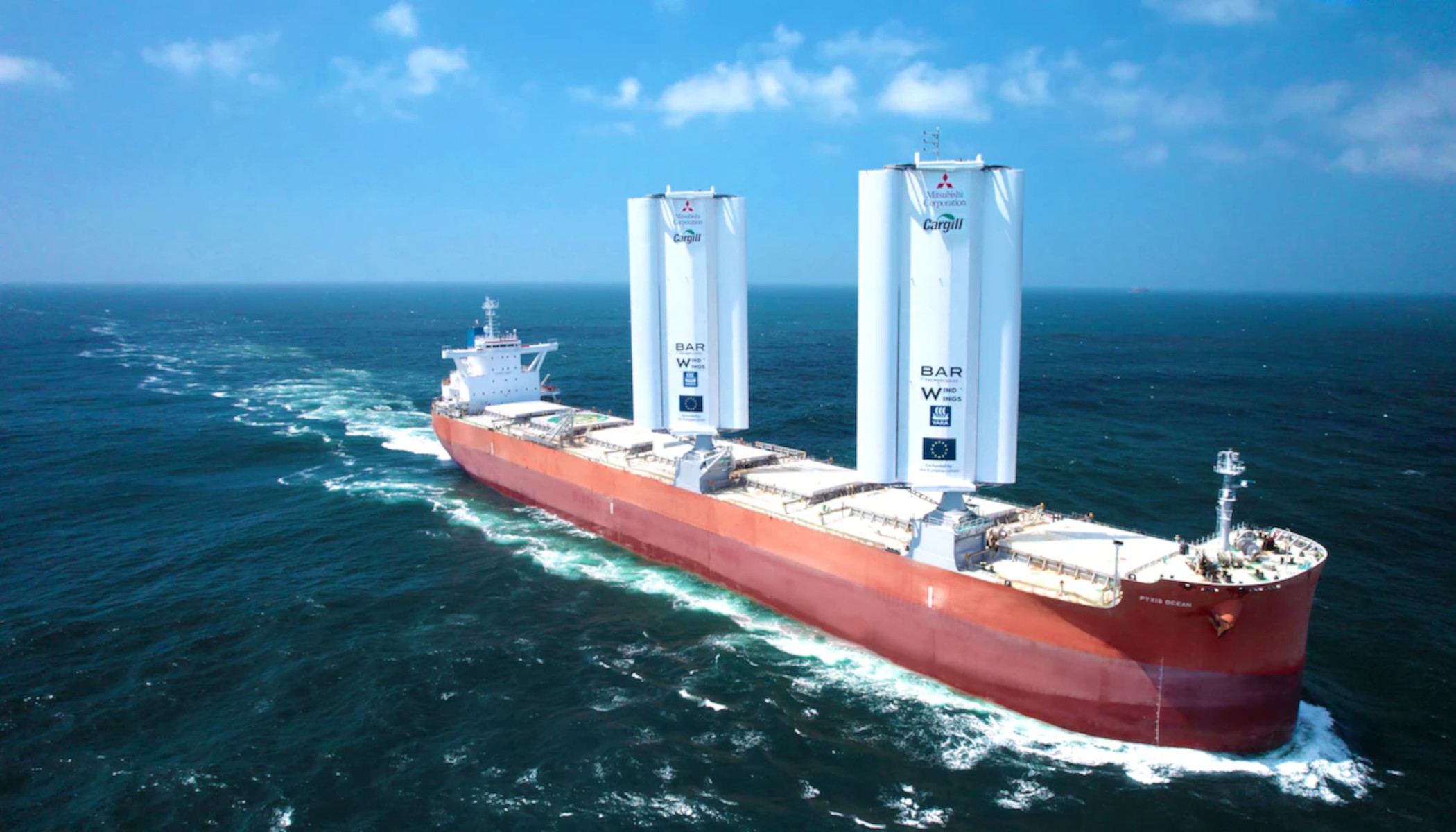
BAR is manufacturer of WindWings, three-piece rigid sails that deliver 2.5 times the lift of a one-piece rigid sail. There are no energy-demanding rotating parts. The sails deliver proven performance in a wide range of wind speeds and directions. BAR Technologies is a major player in the wind-assisted ship propulsion market, especially in Asia.
John Cooper, BAR’s boss, now identifies a significant hurdle in the development of the WASP market.
Wind propulsion delivers fuel and emission reductions, but acceptance is still uneven. The way charter parties share the market with each other is the main obstacle to scaling up decarbonisation in shipping, according to Cooper.
Not a technical problem
The adoption of systems like WindWings within fleets remains limited. According to BAR Technologies, this is not because of technical readiness, but because of commercial structures and. “The industry does not have a technological problem; it has a contractual problem,” Cooper said.
At the centre is the long-standing split between ownership and operation. Shipowners invest in vessels and equipment, while charterers control fuel consumption. In time-charter agreements, this leads to a discrepancy. Shipowners finance wind propulsion systems, but charterers often benefit from the fuel savings.
“The conflicting interests between shipowners and charterers are certainly an issue when it comes to scaling up wind propulsion technologies,” said Gavin Allwright, secretary general of the International Windship Association. He added that “the need to review the current charterparty framework and the treatment of wind within it has moved higher up the agenda”.
New variables due to wind propulsion
Legal complexity adds to the challenge. Wind drive introduces new variables in performance clauses, from how efficiency is measured to how results are verified. “Different types of ‘days with good weather’ may very well lead to different performance guarantees depending on wind angle and speed. This is an evolution rather than a revolution when it comes to time charter clauses,” said Charles Patterson of Shearwater Law.
A solution to this is being worked on. BIMCO is developing an addendum for the retrofit of energy-saving equipment to help parties agree on the sharing of costs and benefits during a charter period.
Still, most solutions remain bespoke: uncertainty can delay investment decisions, even as regulatory pressure increases.
“The question is no longer whether wind propulsion works, that has already been proven,” Cooper said. “The question is whether the industry can afford to make it commercially successful now, not later.”
Source: an article by Arnel Murga on Vessel Performance.
Photo: BAR.

Windassist sponsor