
A new direction for the Sea Rangers?
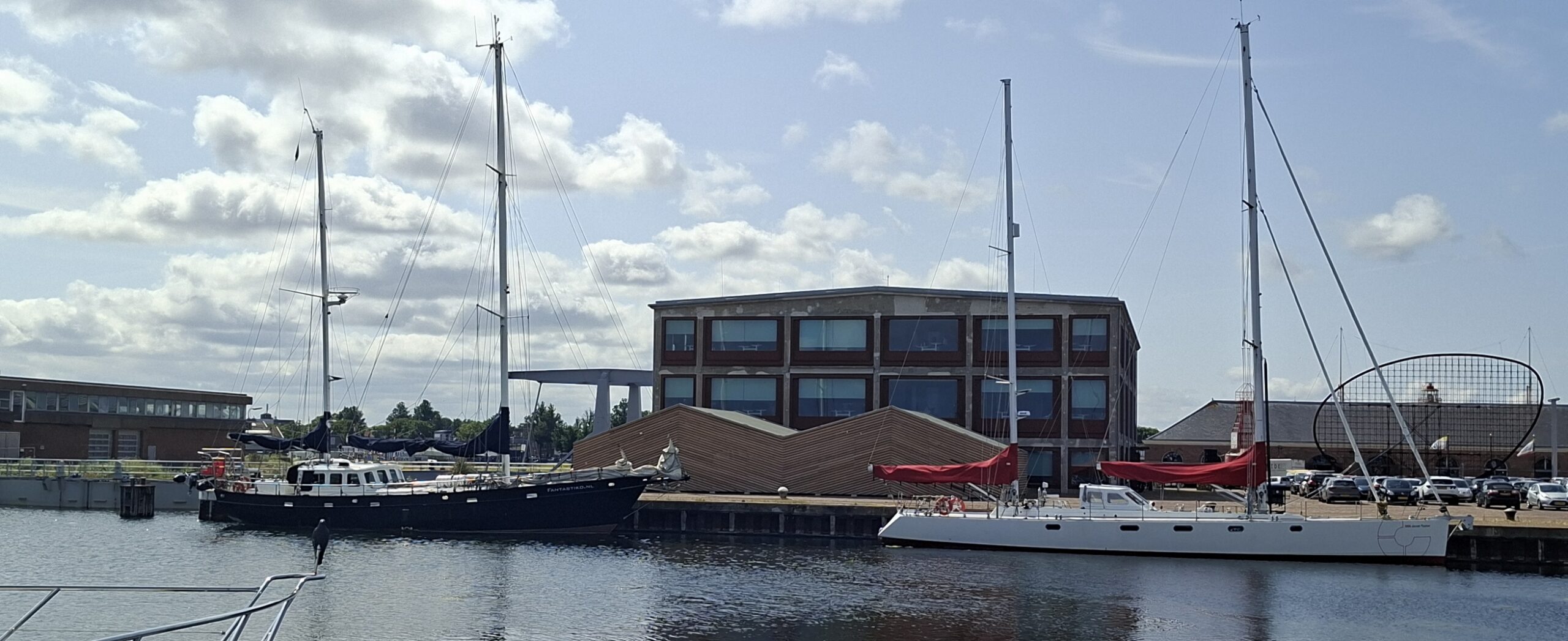
The two Sea Rangers vessels have been moored in Den Helder for some time now. The Zeepost editorial team asked founder Wietse van der Werf why they are moored there and what new plans are in the pipeline.
No reply was received.
 The most recent addition to the fleet is the Janet Taylor, which was christened by Queen Maxima last year. As one of the ships where Zeepost is produced has a direct view of both vessels, it was an opportunity to go and see what was going on. The editorial team took a short walk over to the ships when, suddenly, people were on board. It turned out to be a good guess; the English and Dutch crews were in Den Helder to discuss new projects. Naturally, we wanted to find out once again what those plans entail. In response, we received an article from *Time* magazine, excerpts of which we are now publishing. The article sets out laudable objectives and ambitious plans. Many are drawn to the approach: tackling youth unemployment and taking a practical stance on ecology. Apart from the project focused on the conservation and preservation of seagrass, the plans for the two ships remain uncertain. To be continued.
Sea Rangers in Time Magazine
“Ambitious climate targets set by governments often place too much pressure on practical capacity, leading to bureaucratic backlogs. Sea Rangers are as versatile as a Swiss Army knife and are seeking public sector contracts across the EU and the UK to tackle the tedious red tape surrounding climate compliance and the hard work involved in clearing those backlogs.”
“Seagrass restoration is challenging work; it requires patience and determination, so it feels incredibly meaningful that this is being recognised by TIME. It helps draw attention to an ecosystem that many people still know very little about, despite the fact that seagrass is fundamental to marine life, coastal resilience and carbon sequestration. For our team, this recognition is a reminder that every seed counts, every seedling planted and every monitoring trip matters,” said Elise Chalcraft, Seagrass Restoration Project Coordinator
A visionary founder
For 17 generations, Wietse Van Der Werf’s ancestors had worked as dockers, shipbuilders and captains in the Netherlands and the colonies. Van Der Werf, however, left school at the age of fifteen. After a series of odd jobs – bus driver, refuse collector, violin maker – his carpentry skills secured him a job on an expedition ship in Antarctica from 2006 to 2010. Van Der Werf was impressed by the frozen continent, but shocked by its decline in the 21st century: illegal whaling, melting glaciers and plastic waste. He soon became an undercover investigator, reporting to the UN on the links between the fishing industry and organised crime. Recognising an urgent need for coastal protection, he devised a plan to recruit young people for climate restoration.
 “The climate debate always revolves around policy, science or technology. It should really be about people,” says Van Der Werf. “The Sea Ranger Service doesn’t just offer jobs. We offer a purpose.”
The aim of the service, set up as a social enterprise, is to recruit young people to help governments and the business sector manage the conservation and restoration of the oceans. Ambitious government climate targets often exceed practical capabilities, leading to bureaucratic backlogs. Sea Rangers offer the versatility of a Swiss Army knife and are seeking government contracts across the European Union and the United Kingdom to tackle the tedious red tape of climate compliance and the hard work of clearing those backlogs.
Contracts
Of the 22 government contracts that Sea Rangers have secured since 2018, 18 had never been put out to tender before – a triple first in environmental, financial and political terms. This combination has made Van Der Werf popular amongst European leaders because of its clever synergy: he promotes left-leaning environmental awareness whilst simultaneously supporting right-leaning rural communities. He even received a handwritten letter of praise from Sir David Attenborough, which began: “Thank you for everything you do in the fight to protect nature. It is responses such as yours that give us the feeling that things and attitudes are beginning to change.”
Participants and training
 Van Der Werf recruits unemployed Europeans aged 18 and over for a five-week boot camp led by military veterans, where teamwork, strength and discipline are taught. Those who make the cut are deployed in two teams: offshore sailors engaged in marine life research, hydrographic mapping, the protection of shipwrecks, the development of wind farms and drone surveillance; or a coastal team focused entirely on seagrass restoration. With an age limit of 29 for new participants, the programme has proved highly popular amongst young people seeking a meaningful career. This initiative could help tackle a global crisis of youth unemployment that has alarmed heads of state, UN agencies and the Pope.
The Sea Rangers offer what Van Der Werf calls ‘Gen Z jobs’: a values-driven, adventurous and hands-on working environment that actively takes gender equality into account – and, as a bonus, it’s Instagram-worthy. Sea Rangers earn a living wage starting at around $17 an hour. Van Der Werf receives a salary of around $65,000, and no employee is allowed to earn more than five times the wage of the lowest-paid worker. Since the first intake in 2018, the organisation has recruited 208 people – and taught them skills they can take with them into other careers; half have moved into maritime jobs, whilst others are engaged in craft trades such as carpentry or silversmithing.
Sources: Sea Rangers and Time
Photo above: Watersportmedia
Other photos: Sea Rangers
Previously in Zeepost, Scheepspost and Windassist

Windassist sponsor