
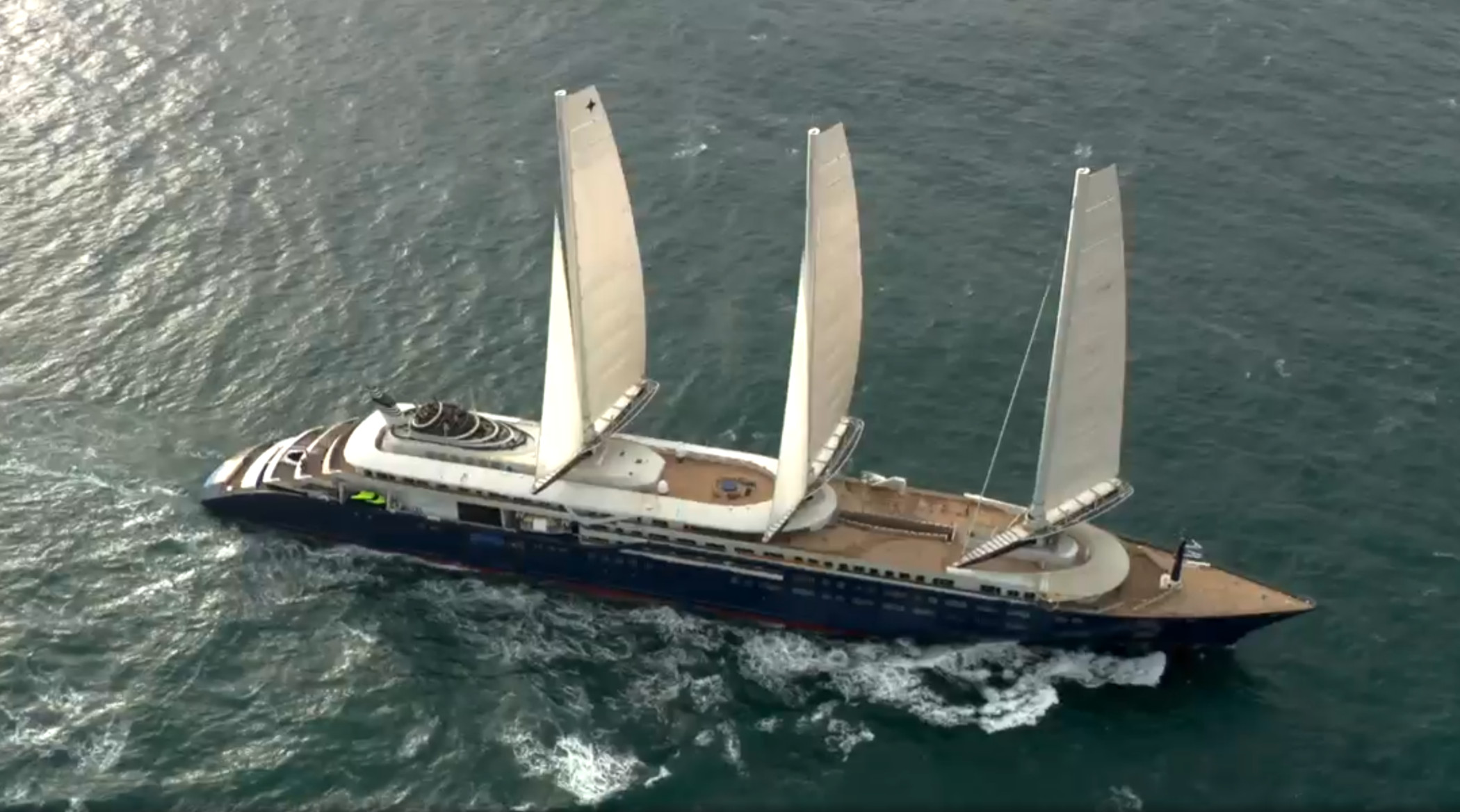
A simplified model to identify WASP performance factors
In an article in the Journal of Sailing Technologies, four French scientists identify performance factors for wind-assisted ship propulsion systems.
The abstract of the article summarizes what the authors have found:
“The decarbonization of maritime transport is a critical challenge in the global transition toward sustainability. Maritime transport is responsible for 3% of the CO2 emissions while the International Maritime Organization (IMO) has approved the Net-Zero Framework for 2050.
While wind-assisted ship propulsion (WASP) offers a particularly promising pathway, its actual effectiveness depends on a complex interplay of aerodynamic, hydrodynamic, and operational factors that must be evaluated systematically.
This paper addresses the need to evaluate the relative influence of these coupled parameters by developing a simple and comprehensive framework to examine the primary parameters governing the performance of wind-assisted propulsion.
Four dimensions are explored in this study, considered as promising in the actual state of the art: the impact of aerodynamic propulsion devices performances (comparing Flettner rotors and Rigid wings), hydrodynamic advantages of twin-hull architectures as an alternative to standard monohull designs, vessel operating speed and weather routing optimization.
By integrating these elements within a unified analytical framework, the work aims to clarify the interactions and the relative importance between design and operational factors that determine the potential of WASP systems in various weather conditions.
We hope that it will provide a structured basis for quick assessment and comparison of the respective potential of solutions. It should be seen as a useful step to identify main factors influence on fuel saving before enhancing the modelling in a future study.
The study can here be viewed and downloaded (in pdf) via this page.
Source: Onepetro.org.

Windassist sponsor