
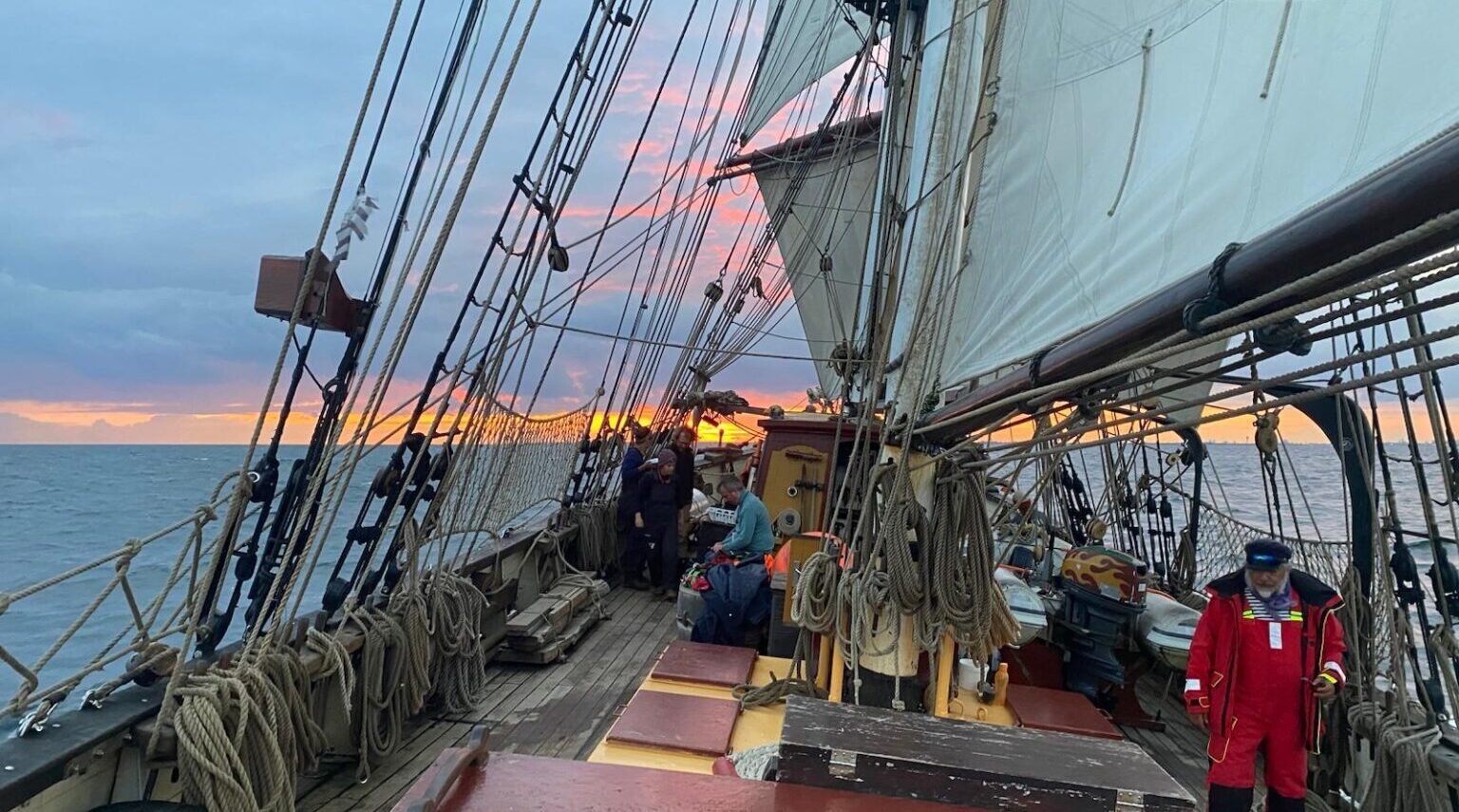
Crossing the ocean for the first time
Webby, trainee on the Tres Hombres, takes us on her first ocean crossing. After days of waiting on La Palma, she actually leaves.
My first impressions as a novice sailor when I boarded the Tres Hombres in Santa Cruz de La Palma were: how small she was and how much she rocked on the waves, despite being in port. Everyone told me this was nothing compared to rocking at sea, but at the time I didn’t quite believe them. There was also a certain peculiar but not unpleasant smell that I could not identify at first, but which later turned out to be tar – the lifeblood and essential lubricant for maintaining a healthy wooden ship.
Delay
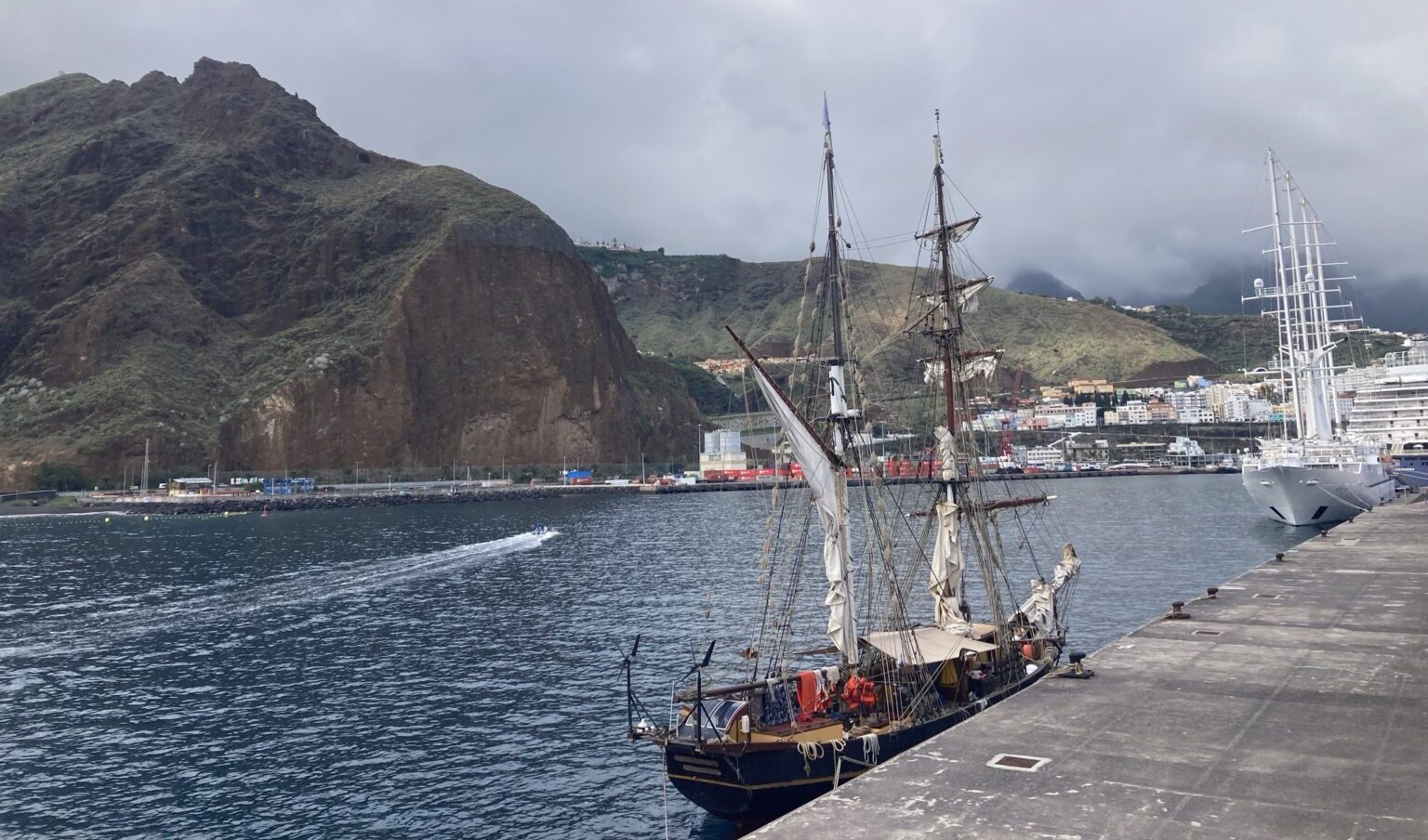 Boarding the Tres was a moment we newbies had been eagerly awaiting for the last weeks of 2025. We were constantly following her position on tracking sites. Of course, we were disappointed that the Atlantic crossing was delayed, but the positive was that we could spend Christmas and New Year’s Eve with our friends and family on La Palma before the real fun began.
It was a real blessing to spend a few nights on the Tres Hombres before we left. It was crucial to get used to life on board, to our berths and to be introduced to some of the basics of sailing. Of course, we had the luxury of going ashore at almost every hour of the day to run errands, charge our devices or take a shower, knowing that this luxury would soon be virtually unattainable.
Before we left, I must also mention the excellent climbing training provided by the wonderful Vinny (deck mate). He gave us climbing harnesses and showed us how to climb safely along the bowsprit, foremast and yard.
Views
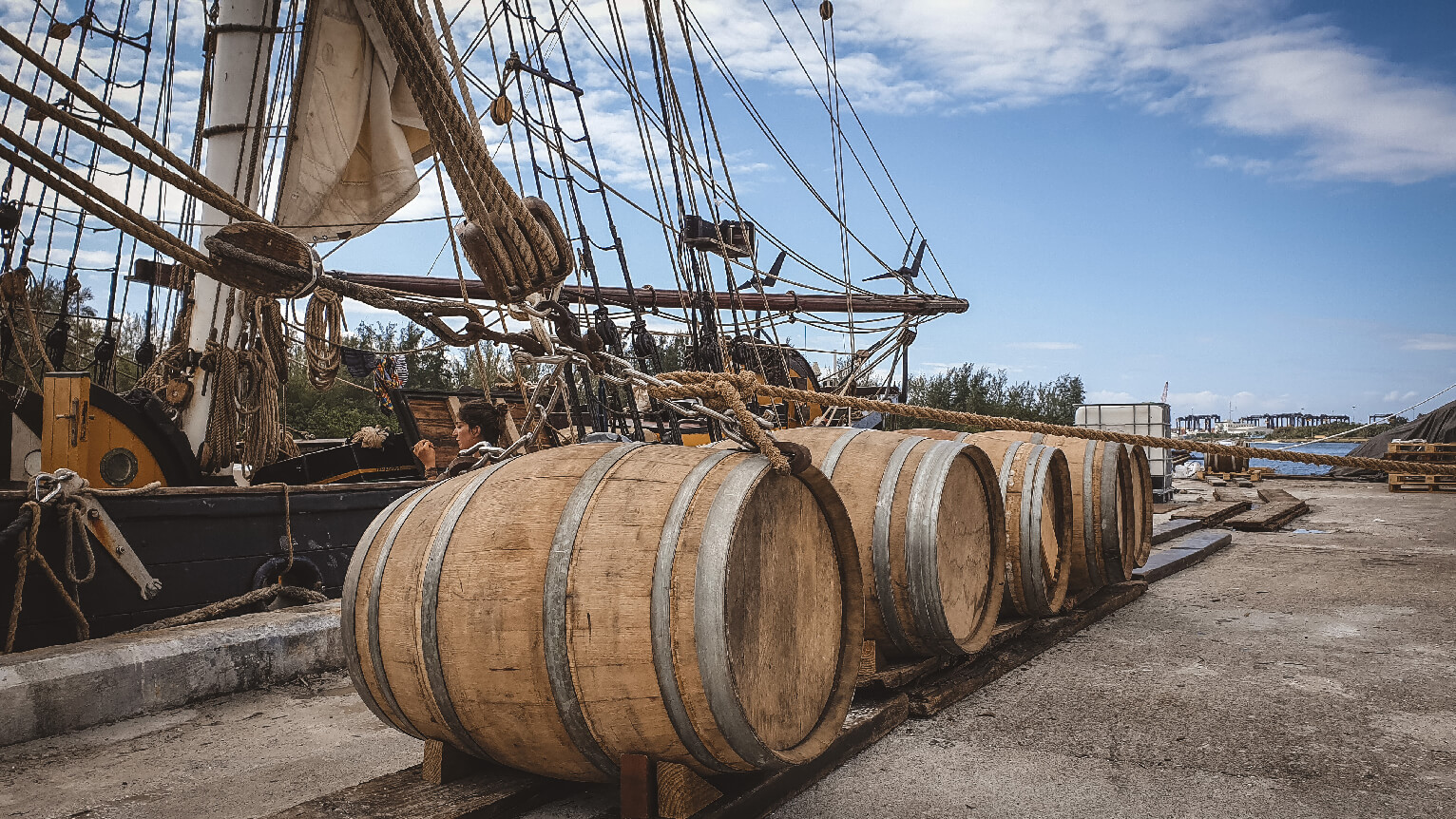 Loading the rum before departure, where we hoisted the 250-litre drums into the hold one by one, was also particularly impressive. It was the first time we were on deck with the whole crew. The first mate gave each team clear and specific instructions on how to carefully hoist or lower the barrels so that the cargo could be manoeuvred safely and skillfully into the hold. Similarly, I became increasingly aware of the constant stream of tourists around the Tres Hombres. Some were casual spectators, but others had clearly sought us out. Sailors, who were all fascinated by the incredible craftsmanship and special atmosphere of this beautiful wooden freighter
Departure
OK, the moment you have all been waiting for: leaving La Palma and leaving Europe for America, following in the footsteps of our ancestors and taking advantage of the generous north-easterly trade winds. At this point, as a novice trainee, I can’t tell you exactly what happened with hauling in lines, untying other lines, untying mooring lines, using fenders to protect the hull, and of course the dinghy to steer the ship in the right direction. We were all given roles: ‘you go there’, ‘you do this’, and before you knew it, we were sailing out of the harbour and our friends from earlier stages of the voyage could be seen in the distance as waving dots!
As we watched the land masses of La Palma and El Hierro slowly disappear from view, the reality of our adventure really dawned on us. We were crossing the second largest ocean in the world, powered solely by wind and sails. For two to four weeks, we would be without phones, wifi, showers, doctors, dentists and all the other necessities we normally take for granted. From now on, there was no possibility of changing our minds or disembarking before we reached the other side. And indeed, the boat rocked much more than in port. Although I was initially complimented for being able to read a book without getting nauseous, this was short-lived. About six hours after departure, at the start of my first watch, I succumbed to the dreaded seasickness, despite taking pills, chewing candied ginger and wearing acupressure wristbands. And so I threw up for the first time in the Atlantic Ocean (on the leeward side, always on the leeward side!). I think of all the new interns, about half were seasick, but fortunately we recovered within 24 hours.
Relaxed trip
Unlike previous stages, we all benefited from switching from 2 to 3 watches on this leg. This gave us more sleep, more time to socialise with the other watches and more time on deck in the sun! An example of this was our ‘Sunday Funday’, the only day of the week without boat maintenance. Everyone gathered at the helm to enjoy our daily portion of home-baked sourdough bread and guacamole, and freshly baked (and deliciously seasoned) flying fish. They flew right onto the deck! We enjoyed the wonderful selection of stylish and hip Sunday shirts by the crew and trainees, and we sang campfire songs together on the deck. We also kept our sanity by playing games such as ‘The Murder Game’ (without actually killing anyone), ‘Guess the arrival date in Guadeloupe’, a scavenger hunt and karaoke at sunrise.
However, it was not all fun and games. What we regretted included getting soaking wet from the ocean right after changing our shoes or socks, constantly being woken up by the rolling of the waves and getting stood up by other crew members. And, of course, dropping your bowl of coffee beans/grated carrot/raw eggs in the galley hatch and then cleaning up the mess.
What an experience
We all learnt a lot over the past two weeks, including how to set, iron and trim sails, sailing commands and terminology such as ‘tacking’, ‘sweating’ and ‘scrubbing the deck’, and of course 101 new and exciting ways to enjoy bananas and avocados. It was definitely a crash course in sailing on a freighter without an engine and in life at sea in general. But above all, it was about learning to live in harmony with a small community of 15 people who not only care for each other, but are completely dependent on each other. This very experience, and the considerable distance from everyday reality gives a fresh perspective on your family life. It makes you grateful, not only for the little things, but also for the incredible journey we are now on.
Source: Read Webby’s whole story from the logbook of the Tres Hombres here
Photos: Fairtransport.eu