
British government warns: GPS is unreliable
The British Government advises sailors, shipowners, ports and all stakeholders in the maritime sector to prepare for operations without GPS, as spoofing, jamming, signal loss and interference in Global Navigation Satellite Systems (GNSS) are on the rise worldwide.
Following an extensive series of articles in Zeepost, Scheepspost and Windassist on the reliability of GPS, the first European government has now issued official advice. It remains to be seen whether, in the Netherlands, the government will also issue such far-reaching advice, in addition to the recommendations from organisations such as the Watersportverbond. The consequences could be far-reaching. What about insurance issues: ‘Sailing to the Baltic Sea without a sextant?’ or ‘Liable in the event of running aground?’ The editorial team is investigating.
For previous reports, see the links below this article.
No longer dependent
In a significant move, the Maritime and Coastguard Agency (MCA) published a guideline in mid-October: Marine Guidance Note MGN 719. This highlights the increasing risk of GNSS disruptions and encourages maritime stakeholders to review their operations and ensure they are not entirely reliant on GPS for safe navigation. The warning follows a significant increase in disruptions and spoofing, meaning that GPS must be treated with caution, as it is no longer always reliable.
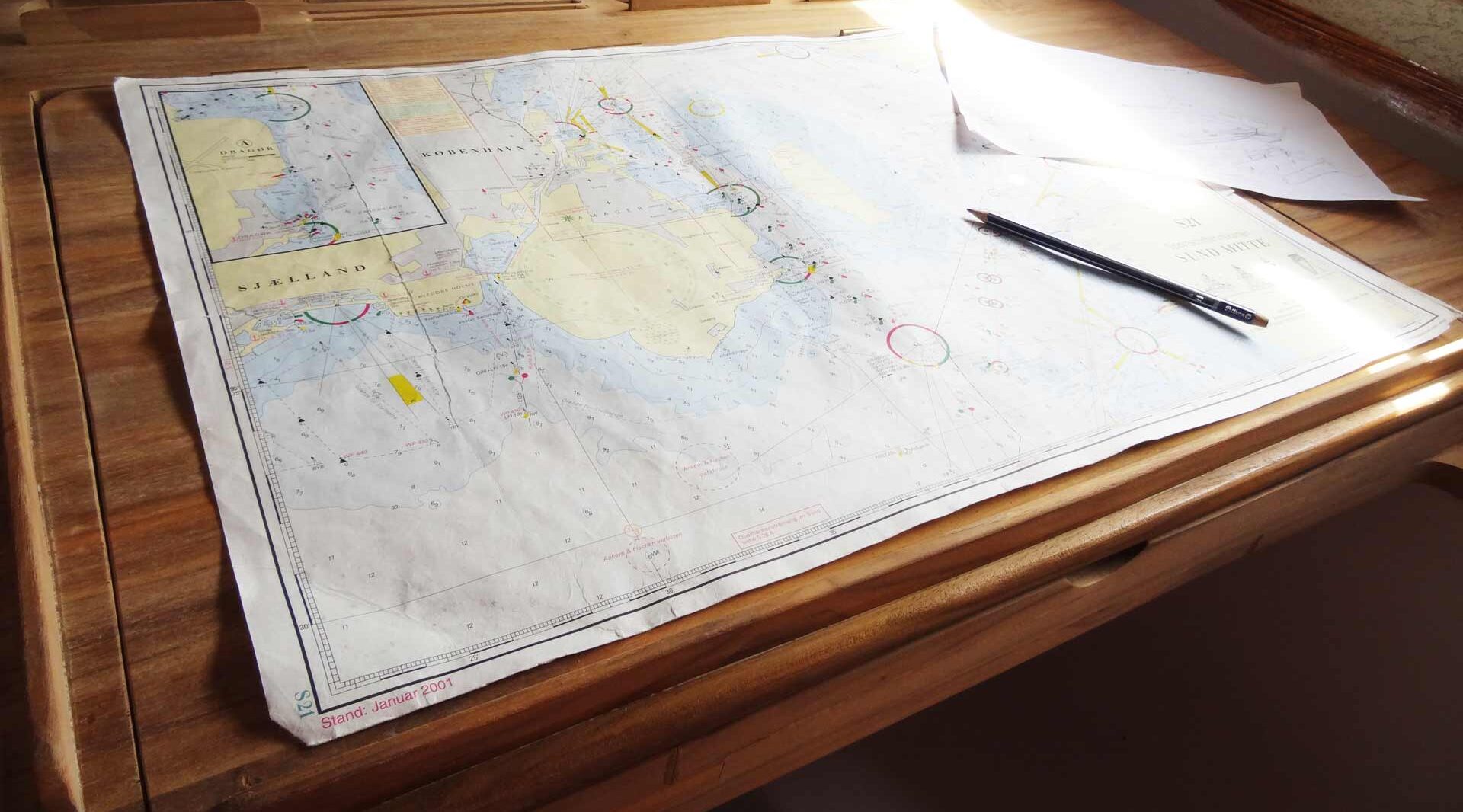
 The MCA recommends that seafarers practise navigating using alternatives to GPS, and asks them to review their onboard procedures to ensure they are not reliant on this technology, but have the skills and equipment to navigate using traditional methods, for example using traditional nautical charts, compasses and chart-plotting equipment.
1,702 attacks in 1 week
In recent years, there has been a striking increase worldwide in the number of reports of GNSS disruptions, particularly in the Black Sea, the Baltic Sea, the Gulf region and parts of East Asia. Such interference can take the form of jamming (where signals are blocked or disrupted) or spoofing (where false position information is presented to users). The UK is urging crews to practise navigating without GPS, as jamming and spoofing are becoming increasingly common. Separate monitoring revealed that, in a single week in September, 1,702 impossible position jumps were detected, involving 379 vessels. “This interference degrades or prevents satellite-derived PNT (Position, Navigation and Timing), meaning that GNSS is no longer universally available in certain locations.
All systems
The warning extends far beyond electronic charts. The agency has drawn up a long list of potentially vulnerable equipment, including ECDIS, AIS, autopilots, dynamic positioning systems, radar, gyrocompasses and GMDSS communication equipment. Onshore, vessel traffic services, pilotage services, port management platforms and automated logistics systems are also vulnerable. The communication follows mounting evidence that interference with satellite navigation is becoming an operational hazard, rather than a mere occasional inconvenience in conflict zones.
Genuine skills
 The directive reiterates the importance of being able to navigate without relying on satellite positioning, and mentions radar bearing, visual bearings, celestial navigation and even good old-fashioned dead reckoning. “These are not skills we should consign to the history books; they are skills that could potentially save your life if the electronics fail at a crucial moment. You can have all the technology in the world, but if you do not understand its limitations, or do not know what to do when it fails, you run the risk of putting yourself and others in danger,” says the British government.
Source: Maritime and Coastguard Agencyand Yachting Monthly,
Previous articles:

Windassist sponsor