
Sustainable shipbuilding and shipping remain uncertain
It remains entirely unclear how many climate-neutral demonstration vessels, which are due to be launched by 2030, will actually be built. Previous ambitious plans promised as many as 40, but 25 seems a fair bit more realistic.
The Agenda for the Maritime Manufacturing Sector, published on 26 October 2023, now assumes that the delivery of climate-neutral demonstration vessels will take place between 2030 and 2033. Further research is first needed to determine which type of propulsion system and which fuel is suitable for which type of vessel. That is the current state of play following the information day during the Maritime Masterplan Conference Call 2 on Thursday 28 May 2026 at Theater Landvast in Alblasserdam. Antoon Oosting, editor of SWZ|Maritime, wrote an opinion piece on the subject.
Allocating the grant
In Alblasserdam, however, a further nineteen organisations came forward, wishing to set up projects in collaboration with others to share the 33.6 million euros available in the second round of subsidies from the National Growth Fund. In 2024, 85 million euros had already been allocated in a first round. According to current plans, a further 100 million euros or more will be allocated in a third round of grants in 2029.
The deadline for submitting grant applications for the second round is Tuesday 3 November at 5.00 pm. A maximum of 8 million euros is available per project, with a total of 12 million euros for smaller projects and 21.6 million euros for larger projects. The RVO (Netherlands Enterprise Agency) is expected to announce which projects have been selected on 16 February 2027. The project must have started no later than six months after this date.
Three energy pathways
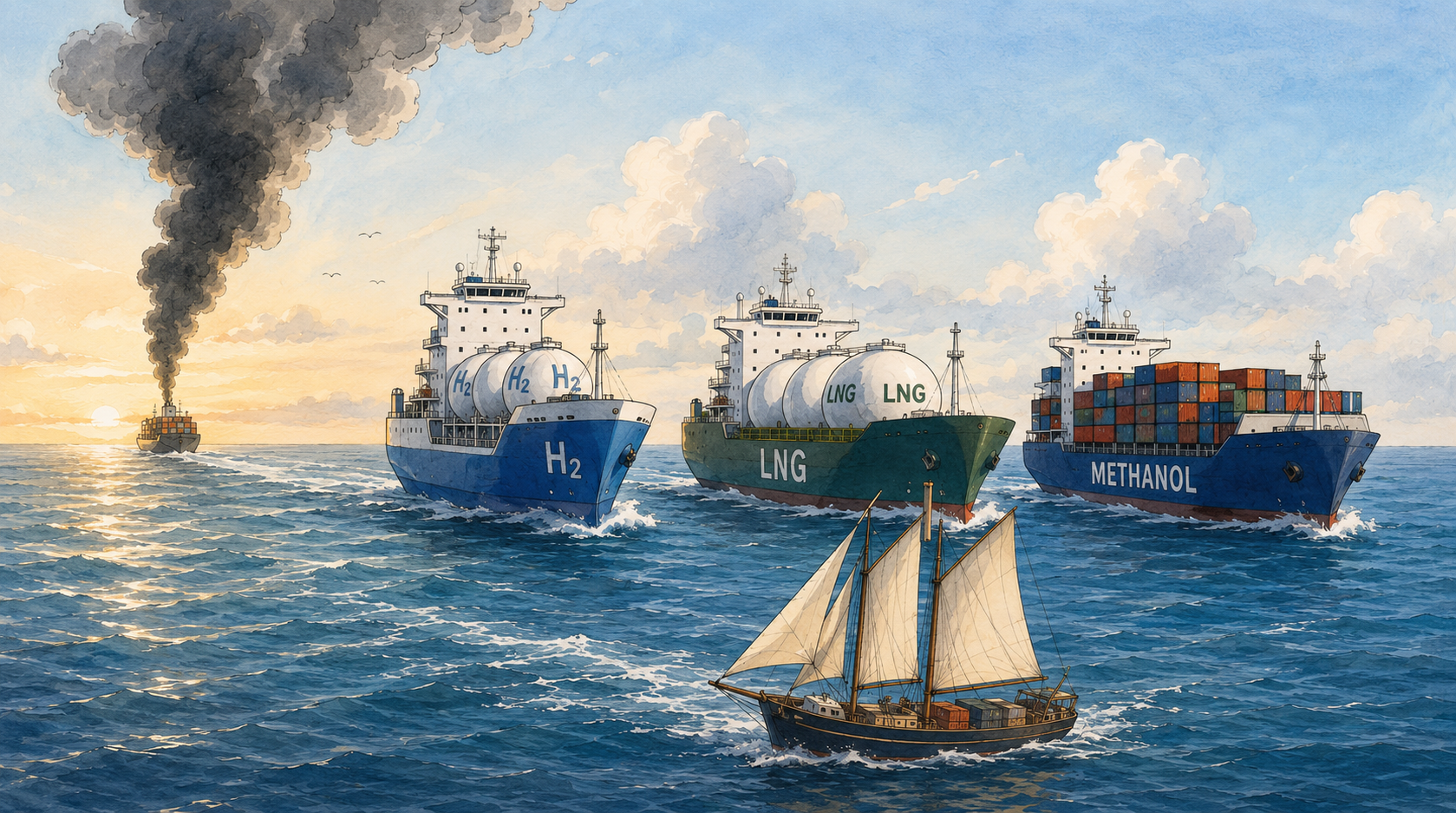
Applicants are required to form consortia comprising at least two independent parties. In the ‘frontrunners’ call for proposals, the Maritime Masterplan focuses on three key energy sectors: hydrogen, methanol and CO₂ capture in LNG. In addition, funding is available for one project in the field of ammonia or bioethanol. The technologies mentioned must be integrated and demonstrated on civilian demonstration vessels.
The projects from the second call build on the experience gained during the first call. On 6 February last year, during the Master Plan’s celebratory networking event, the nine projects were presented which, together, will receive 85 million euros in funding from the first call. These projects represent a significant step towards the Netherlands’ ambition to be a global leader in maritime innovation. Most of the cooperation agreements between the consortia have now been signed.
Digital collaboration
Experience to date has shown that projects must start on time. One of the most important points is that the supply of alternative fuels must be guaranteed; otherwise, projects will grind to a halt. Digital collaboration is no mere afterthought. It is the glue that holds the collaboration chain together and accelerates innovation. Without shared data, cyclical innovation cannot take place. Digital collaboration makes a lasting contribution to the maritime sector.
The second and third (2029) calls also focus on future-proof, climate-neutral energy pathways. These open calls are intended to further develop, demonstrate, evaluate and scale up successful energy pathways from the first call. The three calls form a coherent whole and are designed to support a phased process, in which the broad range of technical possibilities is gradually refined to identify the most promising and effective solutions.
“This second call demonstrates that the energy transition in the maritime sector is entering its next phase,” says Astrid Kee, programme director of the Maritime Masterplan. “With this scheme, we are offering consortia the opportunity to demonstrate innovative technologies in practice on and aboard ships. It is precisely by working together on scalable solutions that we are strengthening the international competitive position of the Dutch maritime manufacturing industry and taking concrete steps towards zero-emission shipping.”
A good project:
- makes an effective contribution to reducing emissions;
- combines development and demonstration;
- involves collaboration across the entire Dutch maritime supply chain;
- results in reliable, modular energy systems;
- is scalable to our strategic end markets of coastal and inland shipping, hydraulic engineering, offshore wind, maritime safety and services;
- reduces costs and, through maximum Dutch involvement, strengthens our revenue model throughout the entire life cycle and our export position;
- makes use of digital collaboration and contributes to its development and implementation, for example through digital twins or the provision of use cases; and
- contributes to the sharing of accumulated knowledge and lifelong learning within the maritime sector.
Editor’s note:
Although the Netherlands is home to leading companies involved in low-emission cargo shipping, both in operation and under development, it is striking that, of the companies and consortia that have so far come forward in response to the various calls for proposals, not a single application relates to wind propulsion.
Source: SWZ|Maritime.
The opening image was generated using AI.

Windassist sponsor