
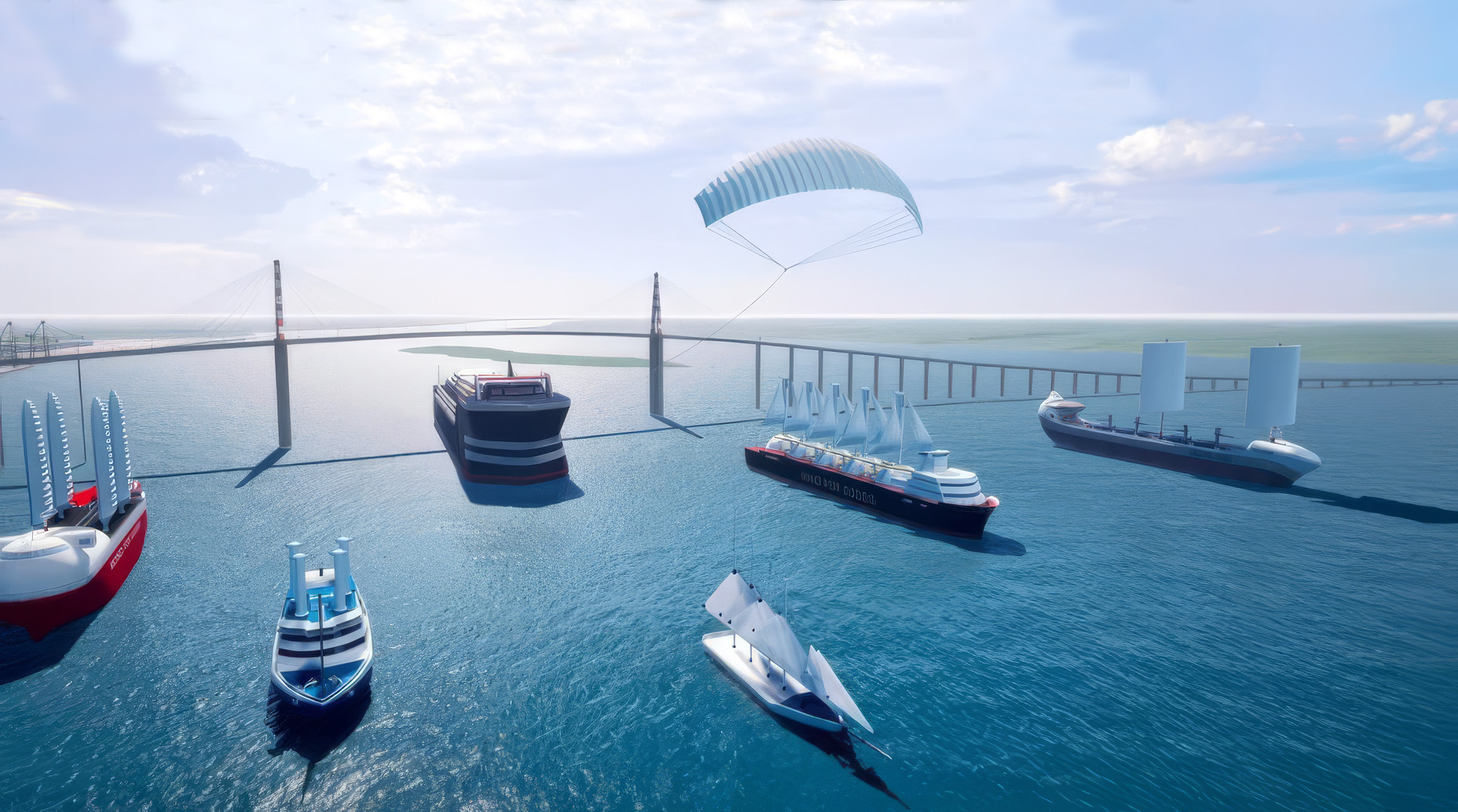
The Association Wind Ship works hard on wind propulsion
For the French association Wind Ship, wind propulsion is a reality since long. Nevertheless, it strongly promotes the industrialisation of wind propulsion, so that French players continue to play a leading role in its development.
Wind propulsion, which utilises free, renewable and immediately available energy, already makes it possible to reduce greenhouse gas emissions by approximately 100,000 tonnes of CO₂ equivalent per year. These vessels, ranging in length from 80 to 200 metres, have a cargo capacity of over 5 million tonnes and are powered by more than 230 sets of sails.
Wind Ship sincerely hopes that the French bill, which could give sail propulsion a major boost, will continue its progress through the legislative process, following its unanimous approval in the National Assembly.
Research and Development
The leading position of the French sailing cargo market relies largely on the strength of Research and Development (R&D). This was confirmed during Maritime Innovation Day, dedicated to sail propulsion, which was organised as part of the NavExpo trade fair. This event, led by teams from the French Ministry of Maritime Affairs and Fisheries and concluded by Minister Catherine Chabaud, brought together 16 representatives from the sailing sector and enabled Wind Ship to draw important conclusions regarding the sector’s maturation, the role of the state, the challenges in the areas of standardisation and regulation, and the dynamics of collaboration.
Maritime Innovation Day
On Thursday 4 June, Wind Ship took part in Maritime Innovation Day, dedicated to sail propulsion, during the NavExpo trade fair.
No fewer than 16 speakers presented concrete examples of the transition to practical application for the sailing sector, reporting to the DGAMPA – Maritime Affairs, Fisheries and Aquaculture – on the progress and results achieved in the field in terms of research and development. Wind Ship draws the following conclusions from this:
- Technical maturity is advancing rapidly: now that technologies from sailing competitions, aviation and the digital sector have been successfully applied in shipping, the vessels currently in operation are making it possible to build up a convincing track record, based on practical experience, in order to improve the systems and make them more reliable,
- The government has played a decisive supporting role and must continue to do so: funding R&D and the first production runs, providing technical guidance for projects and securing industrial pathways.
- Regulation and standardisation can and must act as a catalyst; they are both a driver of decarbonisation and a guarantee of industrial and energy sovereignty.
Wind propulsion for merchant ships was also a central theme at the 7th INNOVSAIL International Conference, held from 3 to 5 June in Gothenburg, reflecting its growing importance in the decarbonisation of maritime transport.
The conference covered all aspects of the technical chain: from the aerodynamic and hydrodynamic modelling of the systems (rigid sails, Flettner rotors, appendages) to their integration on board via digital twins and artificial intelligence. Operational aspects also formed a key part of the discussions during the three-day exhibition, particularly the optimisation of sailing routes and life-cycle analysis.
Source: Press release from the Association Wind Ship.

Windassist sponsor