
40-metre-high wingsail tested in Brittany
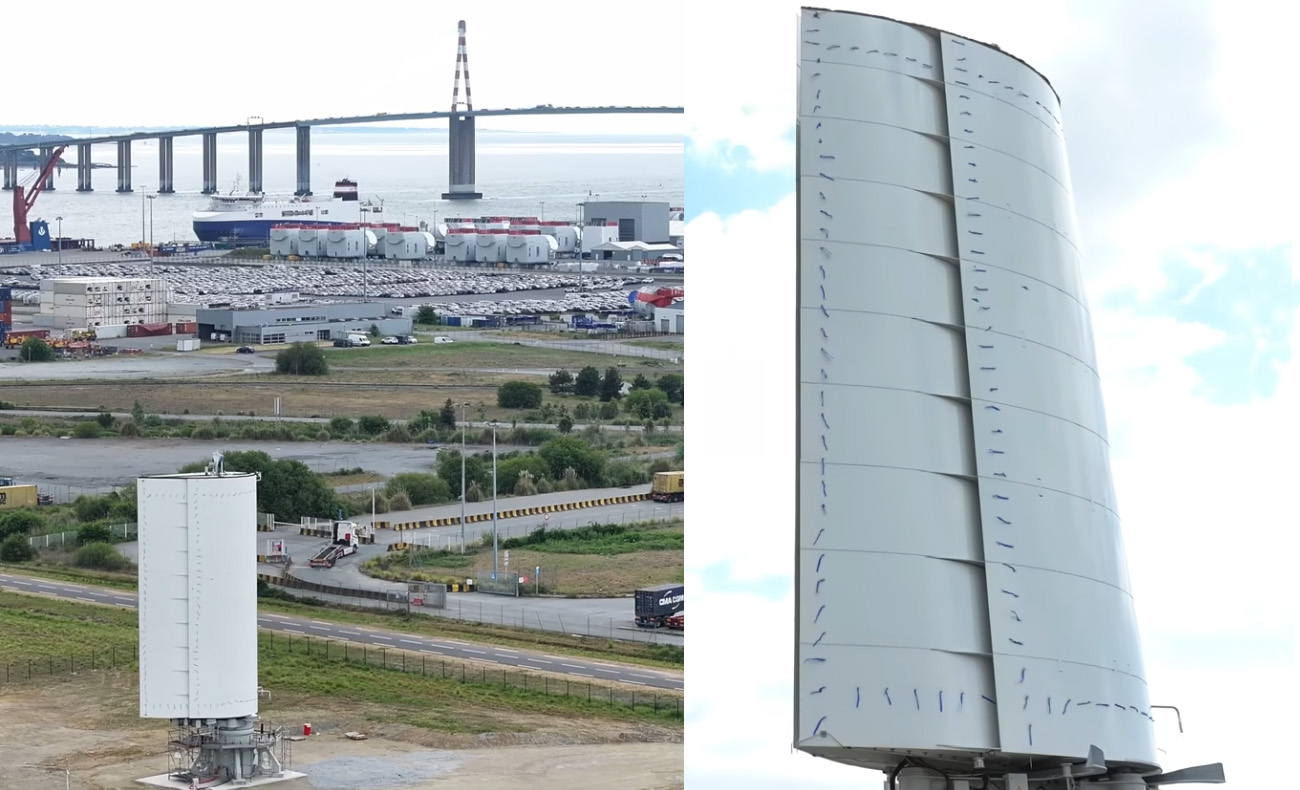
Computed Wing Sail (CWS) has tested a demonstration model of the standard Airfin350 wing in Montoir-de-Bretagne. At this location, chosen for its favourable wind conditions, the wing was subjected to, amongst other things, storm Pedro.
These tests were designed to investigate the wing’s operation and deployment mechanism.
The technology developed by CWS consists of automated rigid wings capable of adjusting their lift and orientation in real time to make optimal use of the wind. According to CWS, the system can reduce fuel consumption by 20 to 60 per cent, depending on sailing conditions, and can be integrated into both new and existing vessels.
In 2023, CWS opened its first factory in Saint-Nazaire, dedicated to the series production of its flagship model, the Airfin350. The team consists of around forty people, based in Paris and Saint-Nazaire.
Tacking by capsizing
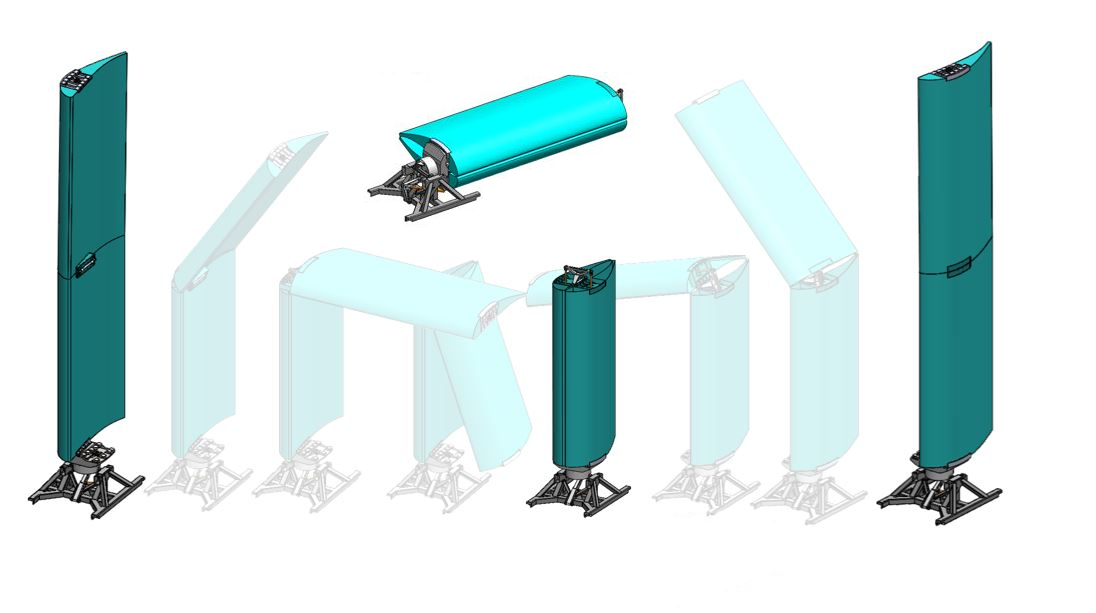 The Airfin350 wing has a curved shape, which follows the profile of an aeroplane wing, without the use of movable flaps. The asymmetrical wing is 40 metres high, has a wingspan of 9 metres and a surface area of 353 m². The wing consists of two sections and has the unique feature of being able to fold inwards with every change of course. The upper surface of the rigid wing folds in towards the base, whilst the lower surface of the wing becomes the upper surface. The profile is thus reversed depending on the wind direction, resulting in an asymmetrical configuration with good aerodynamic performance.
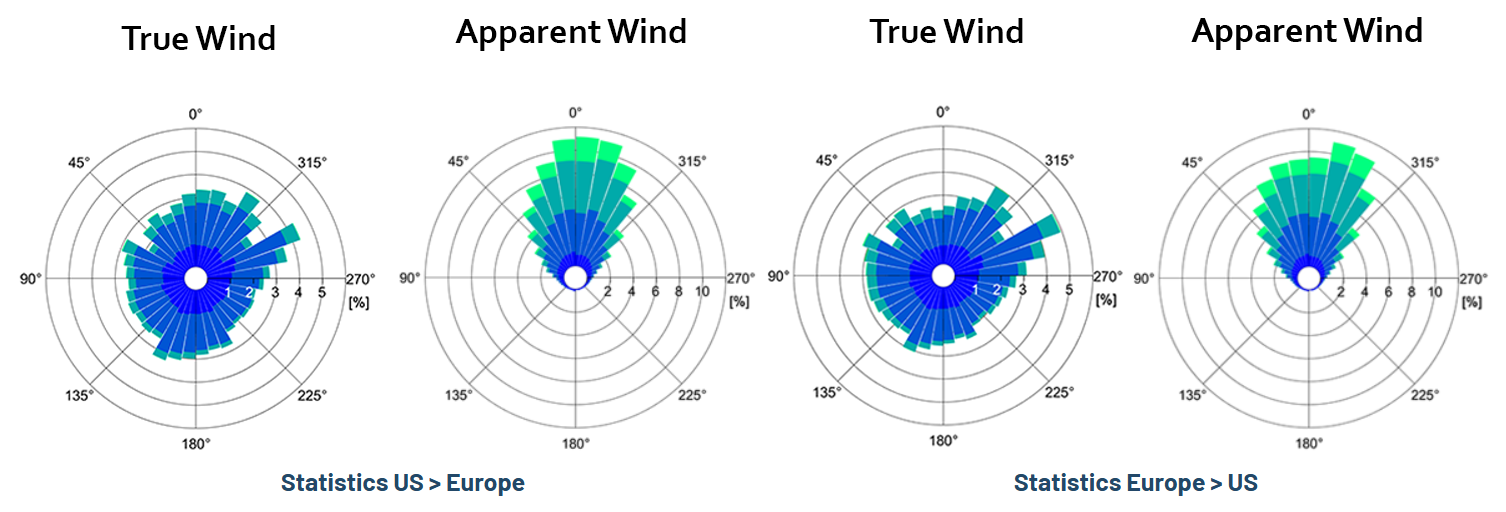
Apparent wind
On Atlantic crossings you encounter a lot of headwind, but if a ship is sailing at an average speed of 16 knots, the apparent wind is practically always against you, or the ship must at least sail close to the wind. The CWS system is designed for this and, as tests show, performs particularly well when sailing up to 20 degrees close to the wind.
The plan is to install the system on the future sailing container ship Miaraka, owned by the cooperative shipping company Windcoop, which was designed by Zéphyr & Borée, with the support of Deltamarine, following consultation with Dijkstra, Groot and Piriou. This 210 TEU vessel will be over 90 metres long and 18 metres wide. It will be equipped with three CWS sails and a diesel propulsion system. The vessel is expected to achieve an average speed of 9 knots; according to Windcoop, the sails can reduce carbon dioxide emissions by up to 60%, based on navigation simulations carried out by the consultancy D-ICE Engineering.
Construction of the vessel is in full swing at the RMK Marine shipyard in Tuzla, Turkey, which previously built the sailing vessel Neoliner Origin. Delivery is scheduled for 2027.
Source: Mer et Marine and CWS.
Image: CWS

Windassist sponsor