
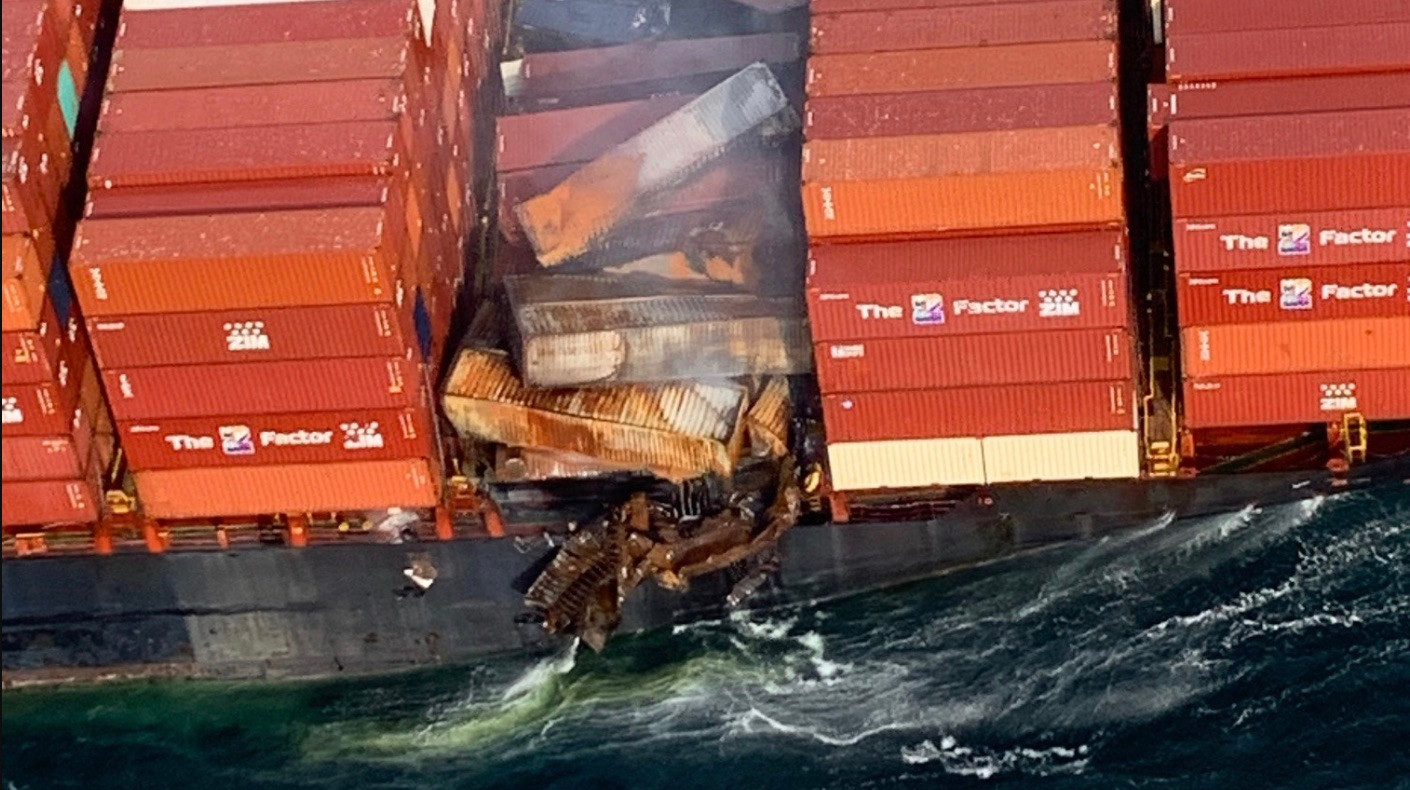
Container losses in 2025 well above the three-year average
In its annual report “Containers Lost at Sea” for 2025, the World Shipping Council (WSC) estimates that 1,478 containers were lost at sea. That is far more than in previous years.
The WSC states that this figure amounts to 0.0005 per cent of the approximately 280 million containers transported worldwide. Whilst this may seem a negligible percentage, it is significantly higher than average.
In 2025, 128 containers were recovered – the highest number of recovered containers since the WSC began collecting data on recovered containers in 2023 – but this represents only a fraction of the number still lying at sea. Moreover, some of them are drifting close to the surface, posing a direct danger to shipping.
Everything must now be reported
The WSC has been conducting its investigations into containers lost at sea since 2011, covering losses from 2008 onwards. From 1 January 2026, new mandatory international reporting requirements came into force, with amendments to the International Convention for the Safety of Life at Sea stipulating that all containers that have been lost or sighted floating at sea must be reported. Flag states must also report the number of containers lost at sea to the International Maritime Organisation (IMO).
The World Shipping Council expects these mandatory reports to lead to better international data exchange and further improvements in safety in container shipping. In addition, the sector is committed to new measures, including the use of artificial intelligence to detect misdeclared dangerous cargoes at an earlier stage, and stricter international guidelines for the safe transport of containers and dangerous goods.
Data transparency
The WSC’s report ‘Containers Lost at Sea’ is based on direct input from member companies representing approximately ninety per cent of global container ship capacity. The data is extrapolated to provide an estimate for the entire sector, assuming comparable performance by non-participating carriers. Although reporting on containers lost overboard will become mandatory at sector level from 2026, the WSC is committed to continuing the global ‘Containers Lost at Sea’ report, with a view to ensuring consistency and transparency.
Incidents and weather conditions
The increase is largely attributable to a few major shipping incidents. The most significant of these was the sinking of the Liberian-flagged MSC ELSA 3 off the coast of Kochi in India. This resulted in the loss of 640 containers, accounting for approximately 43 per cent of total container losses in 2025.

In addition, severe weather conditions in the North Atlantic and North Pacific Oceans played a significant role. According to the WSC, warmer sea temperatures and more erratic storms increased the likelihood of container loss. On-board fires, shifting cargo, collapsed container stacks and sinking ships also contributed to the higher total.
Improving safety
The report highlights ongoing work to improve the safety of containers and cargo, such as the WSC’s cargo security programme, which aims to help prevent the incorrect declaration of dangerous goods. In recent years, the number of ship fires has risen to its highest level in more than a decade, with incorrectly declared or undeclared dangerous goods identified as one of the main causes. Using a digital screening tool, the programme aims to improve the detection of high-risk consignments before they are loaded on board.
A revised draft of the Code of Practice for the Packaging of Cargo Transport Units (CTU Code) has now been drawn up and submitted for approval. Once the updated code is finalised, it will form an important basis for improving cargo integrity and reducing avoidable risks – including those that may contribute to the loss of containers at sea – by reinforcing best practice amongst all parties involved in the packing, handling and transport of containers.
The TopTier Joint Industry Project (JIP), led by MARIN and involving more than forty industry stakeholders, has submitted its final report to the IMO, setting out recommendations to improve container safety and reduce losses at sea. The project has identified the main causes of container loss, developed practical tools and training programmes for seafarers, and made recommendations to the IMO and ISO for amendments to regulations and standards.
The WSC has welcomed the new regulations classifying all charcoal shipments as dangerous goods under the IMDG Code. The rules, which also impose stricter requirements on handling, packaging and stowage, are intended to prevent fires caused by incorrectly handled cargo. Many maritime carriers have already implemented the stricter requirements in the course of 2025.
Sources: Mariska Buitendijk in SWZ-Maritime and Visserij.nl.
Image: Visserij.nl and Capitaldaily.

Windassist sponsor