
Towards a just and sustainable shipping industry
For Peggy Engelmann, it is an open and shut case that the current system of worldwide shipping is not sustainable. In this article, she takes up the cudgels for the organization Fair Winds Collective.
The system of container shipping has grown larger and more complex and its effects have become more pronounced. But we are at a crossroads. The globalized world that container ships helped create has its flaws, with far-reaching consequences for the environment, workers and communities worldwide. Shipping goods across the globe – like sending fish to China to be filleted before returning them to European supermarkets – exposes the absurdity of modern trade. This is not just a logistical issue; it’s an ethical one. The future of shipping cannot continue on this unsustainable path. The question must be asked: should we continue shipping in this way, or should we adopt a model that is more responsible and sustainable?
Power balance and working conditions
One significant step forward would be improving the working conditions on these ships. If wages and rights were improved for sailors, it would not dramatically affect the cost of goods. The greatest expenses in shipping are the massive ships themselves and the fuel to run them – not the salaries of the workers. But this issue goes beyond wages. It’s about restructuring the entire system. We need to ask ourselves whether we want to continue the kind of shipping that prioritizes profit over people and the planet.
The reality of modern shipping is shaped by a small number of companies that control most of the global container trade. This concentration of power, which holds sway over prices, emissions, and working conditions, has enormous implications for the world economy and society. There are far-reaching consequences to the fact that so few companies wield so much power. When the majority of the shipping sector is governed by three alliances, these companies set the terms for trade. This unbalanced system perpetuates exploitation and fuels economic disparities.
This imbalance extends to the workers aboard these ships. The segregation between officers and lower-ranking workers, particularly those from the Global South, is stark. These workers endure poor conditions and are often trapped in cycles of exploitation with little hope of improvement. This mirrors the racial and economic hierarchies that colonialism left in its wake. It’s clear that to create a just and sustainable future, this system of exploitation must be reimagined.
Fair Winds Collective and the Transformation
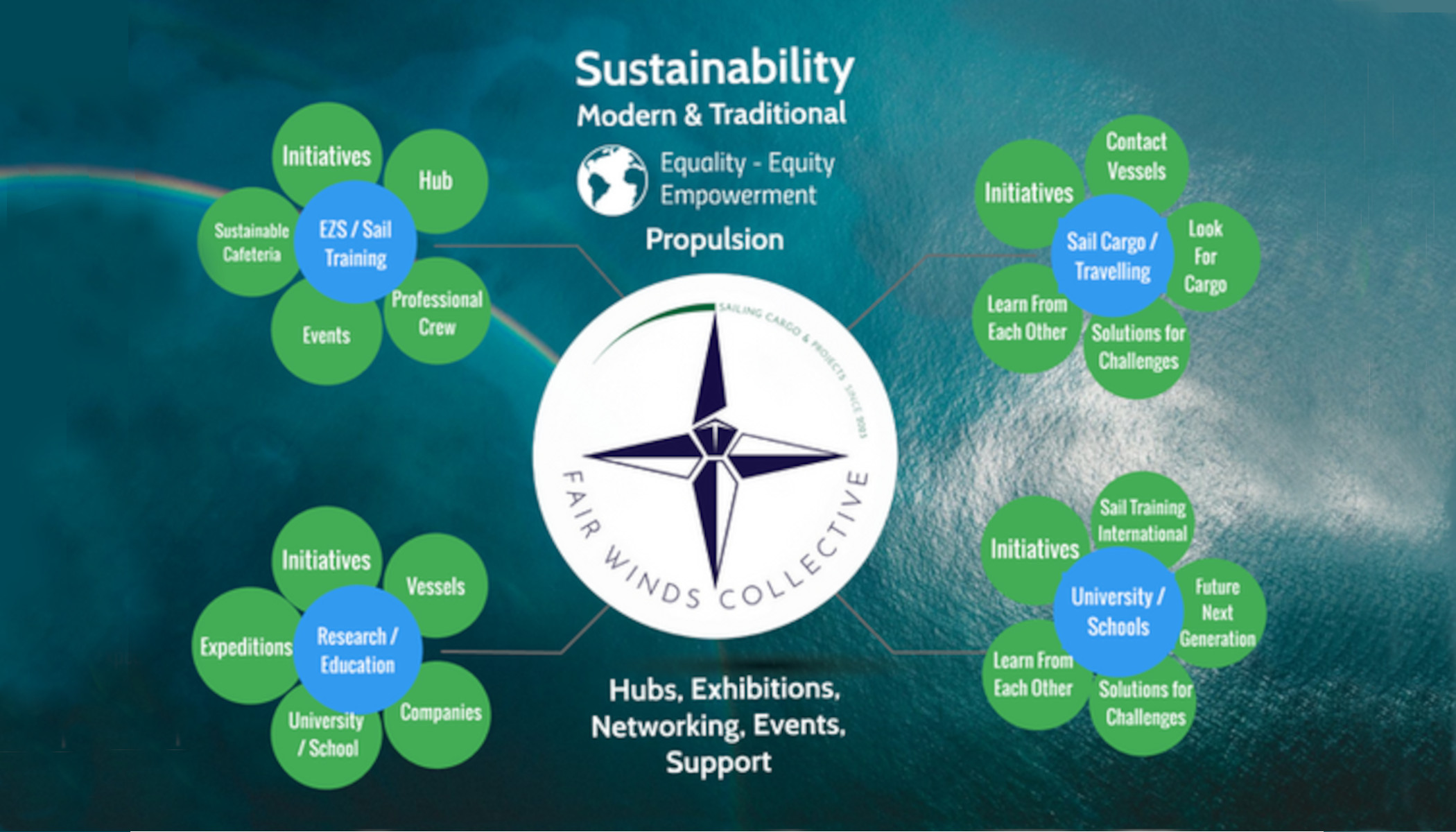
A powerful example of reimagining shipping for a sustainable and just future is the Fair Winds Collective (FWC). FWC is an international network platform that unites sustainable European sailing cargo, education and science projects. With hubs serving both national and international needs, it acts as a vital network for visibility and professional sailing crews, while also providing a transfer point for goods and trainees. FWC promotes sustainable initiatives and is dedicated to advancing sustainable sailing on a global scale through events, exhibitions and collaborations.
By supporting initiatives like FWC, we can begin to shift away from the exploitative systems of traditional shipping and toward more responsible, wind-powered maritime trade that respects both people and the planet. The future of shipping doesn’t have to continue profiting from exploitation and environmental harm. Instead, it can be guided by the values of fairness, environmental stewardship and social responsibility.
A Call to Rethink Global Trade and Power Structures
Maritime trade, once a tool of colonial power, can be transformed into a force for justice and sustainability. The legacy of colonialism, which still manifests in global trade, must be acknowledged and addressed. By supporting initiatives like the Fair Winds Collective, we can start to right the wrongs of the past and move toward a future where trade is driven by fairness, respect and environmental stewardship.
The question of what kind of shipping we want in the future is not just about logistics – it’s a question of values. The choices we make today will determine the course of history tomorrow. By rethinking the structures of global trade and embracing more ethical, sustainable models like those promoted by FWC, we can set a new course for maritime commerce that aligns with a more just and sustainable world.
FWC, Peggy Engelmann

Windassist sponsor