
The rock stars of the Tallship Races
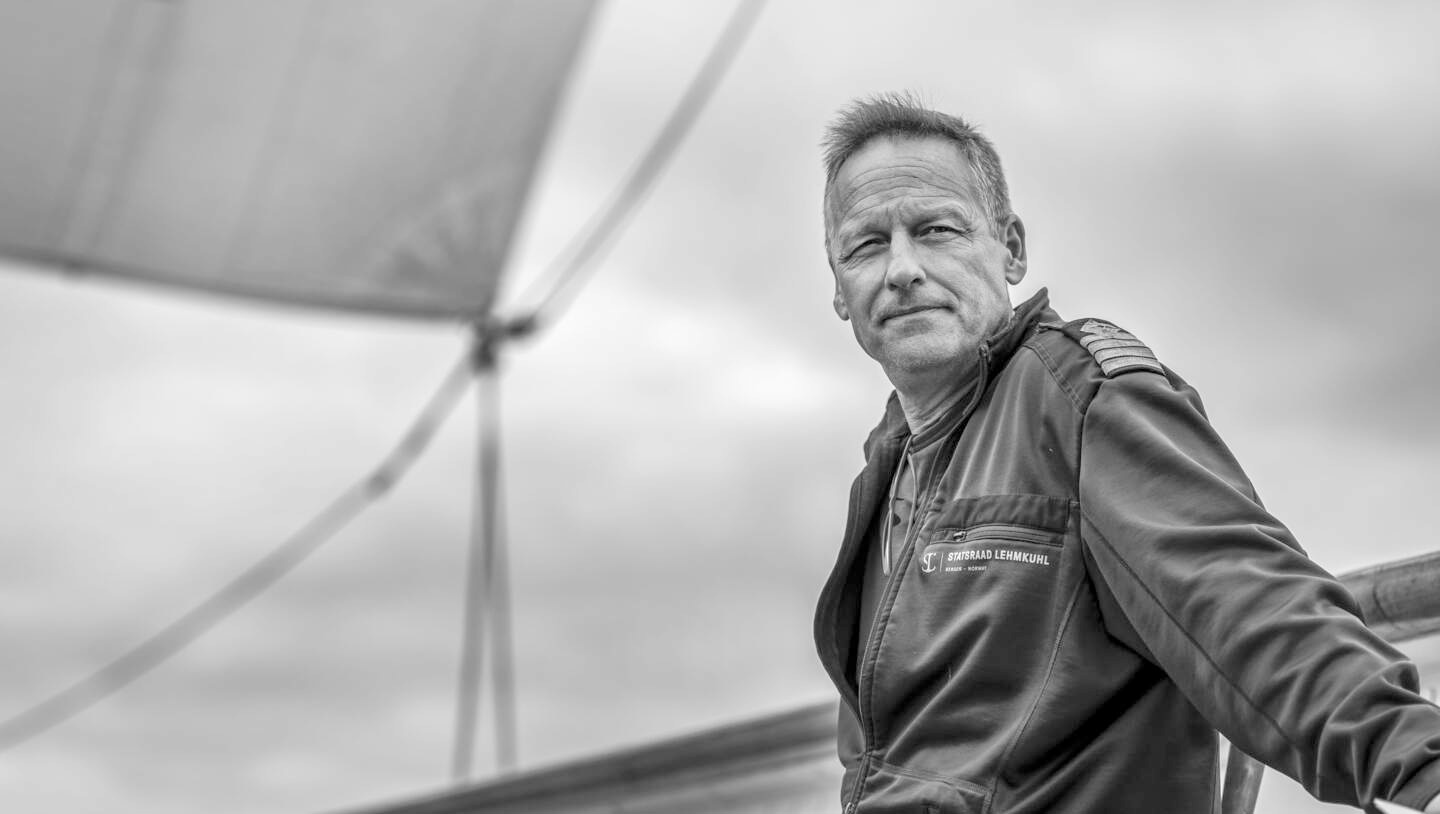
Marcus Seidl (63) from Norway, who has been captain of the Statsraad Lehmkuhl for over 30 years, is enjoying the attention at the Tall Ships Races in Harlingen: ‘We feel just like rock stars’.
Wherever and whenever it moors, the Statsraad Lehmkuhl always attracts a lot of attention. With its white hull, enormous sails and impressive length of no less than 97 metres, it is a colossal tall ship. In the harbour of Harlingen, too, it is the centre of attention on Friday.
The Norwegian training ship is by far the longest to take part in this year’s Tall Ships Races. Captain Marcus Seidl (63) from Norway never gets used to the gaping mouths and beaming eyes of the spectators. “It’s lovely to see their amazement,” he says. “There’s always a lot of attention for this ship. Sometimes we, the crew, feel just like rock stars, because everyone finds what we do so exciting.”
Heading for Harlingen
Last Friday, the ships set sail from Aarhus in Denmark bound for Harlingen. They are due to arrive there early on Friday afternoon. From Harlingen, the fleet will continue on to Antwerp on Monday. The sailing giants will then head via Stavanger (Norway) to their final destination, Aalborg in Denmark.
Over the years, he has sailed virtually all over the world on this 112-year-old ship. “You do get to see a lot of different places.” He prefers sailing on the Atlantic or the Pacific Ocean. “That remains the most fascinating thing for me.”

The sea holds no secrets for him. As the son of a captain, he was destined for a life at the helm. Even as a young boy, he often travelled with his father. “Sailing is my life. It always has been. Even as a child, I used to say: ‘One day I want to steer a big ship.’”
Seidl is the son of German parents, but grew up in Canada. He has now been living in Norway with his wife and daughter for many years – the country listed in his passport. “But actually, I live in two worlds.” He spends half the year at sea on the Statsraad, and the other half ashore. In principle, this is always in six-week periods.
Variety
He really enjoys the contrast between life at sea and on dry land. “I find that very appealing about this job. We constantly have to adapt to new surroundings, which is what makes it interesting.” Deep down, Seidl knows that he prefers to be at sea. He feels truly happy out at sea. It means he “absolutely” misses the Statsraad when he’s not sailing.
He believes it’s a dilemma many crew members struggle with. “When you’re at sea, you want to go home. And when you’re at home, you want to go back to sea. It’s part of our lives.” In his view, working regularly on a ship is much more than just a job. “It’s more of a way of life.”

And that’s only sustainable with a tremendous love of sailing. “At sea, I feel the freedom. You leave everything behind – that’s what I love most.” He’s keen to pass on that passion to the next generation. For him, the Tall Ships Races are the perfect opportunity to do so.
The event was launched seventy years ago to introduce young people to life at sea. The Statsraad Lehmkuhl is the perfect training ground for this. Not only is it large, but it is also one of the oldest ships in the fleet. Every year, Seidl sees how deeply impressed the young people are when they step aboard the majestic ship. “They say: ‘Wow, it’s huge.’”
Once on board, the young people immediately realise that they are all equal. Origin, background and social class no longer play any part. Everyone has to work together and follow the crew’s orders. “They all do that,” says Seidl. “Because they know: if we don’t, it’ll be very difficult.”
A major challenge
Most young people take part in one leg of the Tall Ships Races and are at sea for about a week. That doesn’t sound like long, but it’s still a huge challenge. “Some get seasick, others get homesick. You’re constantly being tested. It’s a challenging situation.”
Partly because the young people can’t use their phones. And that takes some getting used to. “They’re so focused on what’s happening online these days and are always busy scrolling. But that’s always at a distance; you can switch it off if it becomes uncomfortable. On a ship, you live in the moment. You have to face the challenges head-on.”
Sleeping in hammocks
One of the biggest trials is sleeping. On long days, rest is vital, but the night is rather uncomfortable. The 170 people on board sleep in hammocks in the hold, which is a far less luxurious arrangement than they’re used to. That’s partly why there’s such a sense of euphoria once the journey is over. “It’s a life-changing experience for them,” says Seidl. “Afterwards, they feel they’ve survived a difficult time.”
Source: Remco Jacobi in the Leeuwarder Courant (for subscribers only).
Image: Tallship Races, unless otherwise stated.

Windassist sponsor